

Not by itself. Light stretching burns only about 2 to 4 calories a minute, so it won’t cause real weight loss on its own. It does help in other ways. It lowers stress, supports better sleep, eases stiffness, and makes it easier to keep exercising. Pair it with walking, strength work, and sensible eating for results you can see.
Can Stretching Help Lose Belly Fat?
You’ve probably seen the claim: stretch every morning and watch the belly fat melt. It sounds great. It’s also not true.
Your body can’t pick where fat leaves. Fat comes off slowly and from all over, based on your genes, your hormones, and your daily habits. A hamstring stretch won’t burn the fat around your waist.
So why do so many people say stretching helped them slim down? Because it does something quieter. It changes how you feel and move. That shifts your habits, and habits drive weight. Think of it as a helper, not a hero. A good place to begin is a simple daily stretching routine you can repeat without dread.
How Many Calories Does Stretching Burn?
Weight loss comes down to energy. You burn more than you eat, and the gap adds up over weeks.
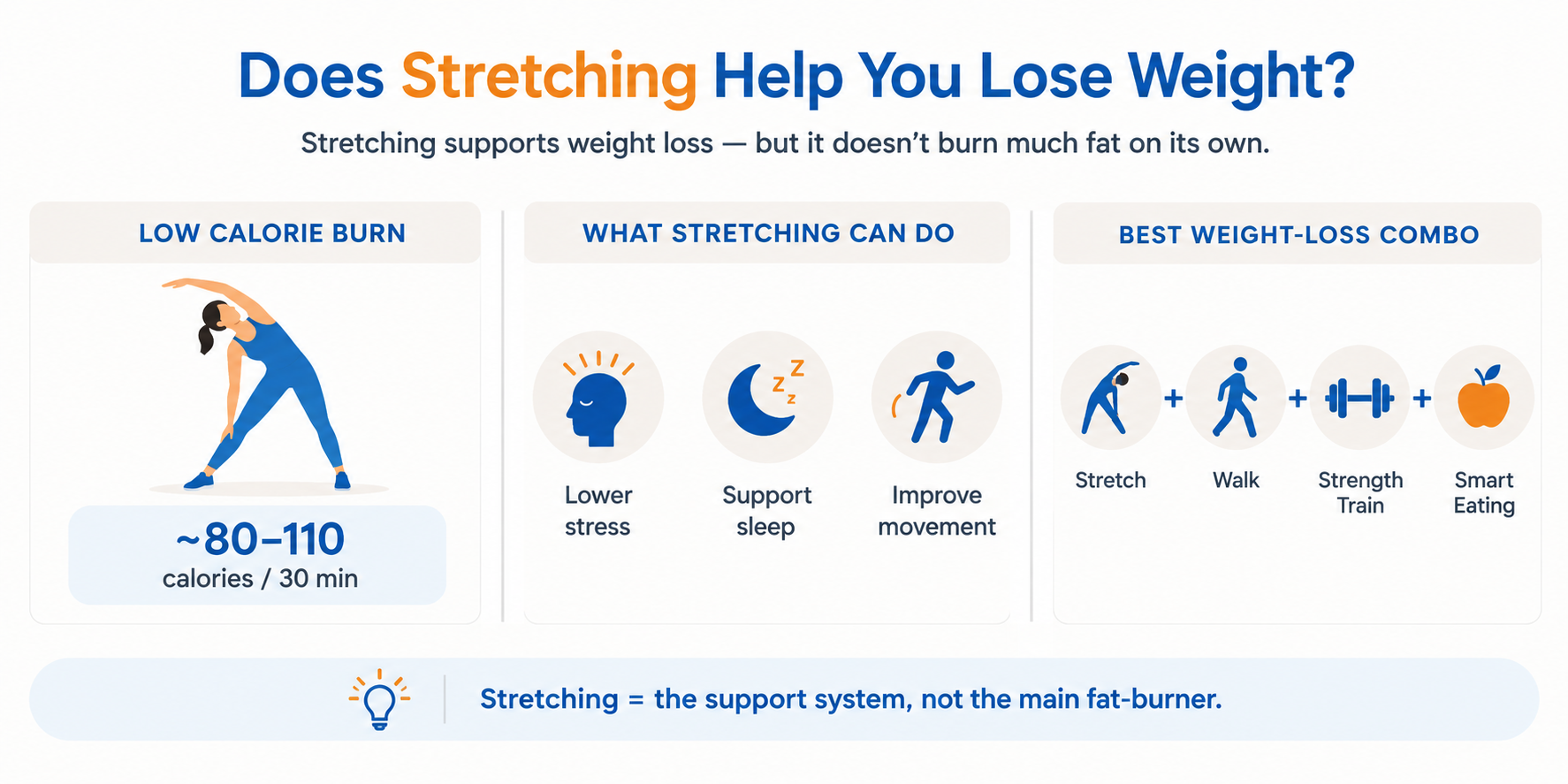
Gentle stretching asks very little of your body. A person of average size might burn roughly 80 to 110 calories in half an hour. That’s about a small banana. Hold a few poses longer, move more slowly, and the number barely changes.
Here’s the thing, though. The burn isn’t zero. And it’s far better than sitting. But if your goal is a calorie deficit, stretching is a weak tool on its own. It works best when it sits beside harder efforts, like those in a full body stretch routine that you do after a workout.
| Activity (30 min) | Approx. calories burned* |
| Light stretching | 80–110 |
| Brisk walking | 130–170 |
| Strength training | 110–220 |
| Jogging (5 mph) | 250–300 |
*Rough figures for a person near 155 lb (70 kg). Your numbers will differ.
How Stretching Can Support Weight-Loss
So, if the calorie burn is small, why bother? Four reasons stand out.
It calms your stress.
When you’re tense for weeks, your body makes more cortisol. High cortisol is linked with stronger cravings and more fat stored around the middle. Slow stretching with deep breaths tells your nervous system to settle. That won’t erase stress, but it takes the edge off. Many people feel this right away, and the reason is explained in why stretching feels so good.
It helps you sleep.
Short sleep makes you hungrier. It also makes junk food look better. A short wind-down before bed can help you drift off faster. Poor rest and tight muscles often feed each other, as shown in the link between poor sleep and a stiff body.
It speeds up recovery.
Sore, achy muscles make you skip workouts. Skipped workouts stall progress. Easing that tightness keeps you training. If you’re unsure when to do what, the difference between warming up and stretching is worth a read.
It improves how you move.
Tight hips and a stiff back make walking, squatting, and lifting feel clumsy. Looser joints make exercise feel easier. And exercise you enjoy is exercise you repeat.
How to Use Stretching in a Weight-Loss Plan
Don’t swap your workout for stretching. Add it. Here’s a simple way to do that:
- Start your day with 5 to 10 minutes. A morning stretching routine for beginners wakes the body without wearing it out.
- Warm up with movement first. Use dynamic moves before you train. Save longer holds for afterward.
- Hold each stretch long enough. About 30 seconds works well for most people, and you can fine-tune this using how long to hold a stretch.
- Walk daily. Aim for 7,000 to 10,000 steps if your body allows it.
- Lift something twice a week. More muscle means a higher resting burn.
- Stretch before bed. Keep it slow. Think five minutes, not fifty.
That’s it. Nothing fancy. Does it feel too easy? Good. Plans you can stick with beat plans that look impressive.
Stretching Mistakes to Avoid
Some habits quietly undo the benefits.
Stretching cold muscles is one. Bouncing hard into a stretch is another. Pushing until it hurts is the worst, because pain makes you tense up, and a tense muscle won’t lengthen. You can see the full list in common stretching mistakes to avoid.
Then there’s the big one: believing stretching is your whole plan. It isn’t. Treat it as the glue, not the engine.
When to Consider Assisted Stretching or Personal Training
If you watch a YouTube video on how to stretch comfortably, and still need help, consider individual guidance. Maybe you carry old injuries. Maybe you sit all day and your hips feel locked. Maybe you’ve never been sure you’re doing the moves right.
That’s where assisted stretching comes in. A trained stretch therapist moves your limbs for you. You relax, and they take you through ranges you can’t reach alone. The benefits of assisted stretching include easier movement, less tightness, and a body that feels ready to train.
If you want help building a full plan, a personal training program can combine strength work, cardio, and flexibility in one place. You can also try a free stretching demo to see how it feels before you commit.
The Bottom Line
Stretching is a poor fat-burner and a great enabler. It won’t shrink your waistline by itself. It will make you calmer, looser, and more willing to show up for the workouts that do move the scale.
So don’t ask whether stretching can replace exercise. Ask whether it makes your plan easier to follow. For most people, the answer is yes.
Start small tonight. Five minutes. Then book a session when you’re ready for more.
Frequently Asked Questions
Can stretching burn belly fat?
No. Your body can’t target fat in one spot, and stretching burns too few calories to make a real dent. It can support belly-fat loss indirectly by cutting stress, helping you sleep, and keeping you active. Fat loss itself comes from a steady calorie deficit, plus regular cardio and strength training.
How many calories does stretching burn in 30 minutes?
Light stretching burns roughly 80 to 110 calories in 30 minutes for an average adult. The exact number depends on your body size and effort. Power yoga or active flexibility work burns more. A brisk walk burns more than gentle stretching in the same time.
Is stretching or walking better for weight loss?
Walking is better for burning calories. Stretching is better for easing stiffness and stress. They work well together. Walk to burn energy, then stretch to loosen up and recover, which makes it easier to walk again tomorrow.
Does stretching before bed help you lose weight?
Not directly. But it may help you fall asleep faster and sleep more deeply, and good sleep helps control hunger and cravings. So, a short bedtime stretch can support weight loss over time, even though it burns very few calories itself.