


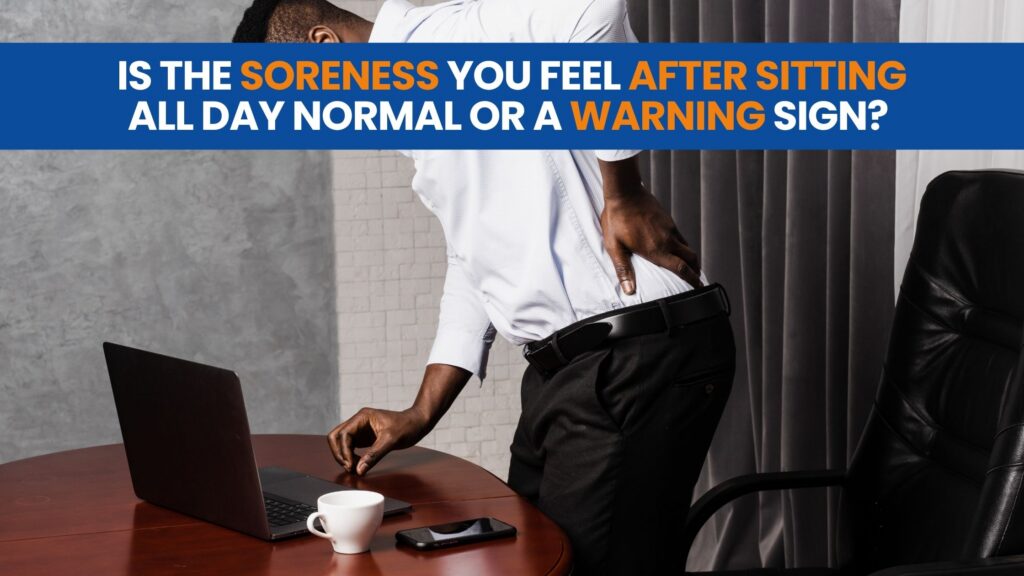
Mild soreness after sitting all day is usually normal. Muscles get tight when you stay still, and a short walk often loosens them up. Watch for pain that is sharp, keeps coming back, or lasts past two weeks. Also watch for trouble with walking, stairs, or sleep. Sudden, severe pain, a hot or swollen hip, or hip pain with a fever needs urgent care.
You stand up after a long meeting. Your first steps feel stiff. You pause, straighten up, and think, “Must be age.”
Maybe. But age is a lazy answer. It keeps you from asking better questions.
Stiffness after sitting is common. Muscles that sit still for hours can feel tight or sore. A sore hip is different, mostly when it keeps happening. What counts is the pattern. How strong is it? How long does it last? What does it stop you from doing?
Why Your Body Feels Stiff After a Desk Day
Think about a normal workday. You sit at breakfast. You sit in the car. You sit at a desk for hours, then sit again on the way home.
Your hips stay bent all that time, and your muscles barely change how they move. A sedentary lifestyle like that can leave your hips, lower back, and thighs tight. You feel it when you finally stand.
Did your desk job wreck your hips? No. But your routine is worth a look. Moving more, changing positions, and setting up a comfy workstation can all ease stiffness from sitting still.
Temporary Stiffness vs. Recurring Pain: Two Different Stories
Picture two people.
The first stands up after a long meeting and feels a bit tight. She walks to the kitchen with ease. The feeling fades.
The second gets a sharp ache just getting out of the chair. He limps down the hall, skips the stairs, and feels the same pain again tomorrow.
Those two need different plans.
Mild stiffness that fades with easy movement can often be handled with a few routine changes. But fading fast doesn’t prove nothing else is going on. Watch for it showing up more often or taking longer to settle. If your hip mobility is shrinking, or you plan your day around dodging pain, get help finding the cause.
When a Painful Hip After Sitting Needs a Closer Look
Sitting may set off symptoms without being the whole story. Hip pain can come from arthritis, tendon irritation, or an injury. You can’t tell which one it is by feeling alone.
Book a medical check if:
- The pain keeps coming back or gets worse.
- It gets in the way of walking, daily tasks, or sleep.
- It hasn’t improved after about two weeks of home care.
Some signs can’t wait. Get prompt care for sudden, severe hip pain, a hot or swollen hip, or hip pain with a fever. Severe pain after a fall, or not being able to walk or bear weight, is an emergency.
Don’t panic over every ache. But a painful hip after sitting that ticks those boxes deserves a visit. Don’t wait until a trip to the store feels hard.

Small Fixes You Can Actually Keep
If your symptoms are mild and no warning signs show up, start small.
Break up your sitting time
Set a reminder to change position or walk for a bit every 30 to 60 minutes. Treat that as a handy starting point, not a hard medical rule. Take calls on your feet if it’s safe. Stand between tasks. On a long drive, plan a stop. The best reminder is the one you’ll follow on a busy Tuesday.
Check your chair
A deep, low couch feels great during a show. It’s harder on your hips when you stand. NHS advice is to avoid low chairs when you have hip pain. At your desk, aim for a setup that feels supported, with your feet resting flat. Change it if you keep leaning, reaching, or shifting to dodge discomfort. Some people also like percussion therapy to loosen tight spots after a long day.
Keep stretching gentle
Search for stretches for stiff hips and you’ll find plenty of routines. Pick moves you can control. Stop if you feel sharp pain or pinching. More force doesn’t make a stretch better. Had hip surgery or a diagnosed hip condition? Follow your provider’s advice on safe movement. A short, easy walk beats a fancy stretching routine for now.
Pick a Goal You Can Feel
“Improve mobility” sounds fine on paper. Getting out of the car without a wince is clearer. So is standing up after dinner and walking right off. Pick one daily task you want to feel easier. Then use it to check whether your routine works.
At StretchPlex, we offer assisted stretching and personal training in North Wilmington, Greenville, and Hockessin. Tell your Body Coach what you feel and what you want to do more easily. That talk shapes your sessions.
Assisted stretching can’t diagnose hip pain or replace medical care. Once you know what’s safe for you, it can fit into a plan built around flexibility and easier movement.
If stiffness has become part of your day, bring a clear goal. Maybe it’s an easier commute, a smoother walk, or a return to something you love. Ready to start? Book a session.
Frequently Asked Questions
Why do my hips feel stiff after sitting for a long time?
Your hips stay bent, and your muscles barely move. Staying in one spot for hours can make them feel tight. You notice it most when you stand around the hips, lower back, or thighs.
Is hip pain after sitting a sign of something serious?
Often, it’s just stiffness. But hip pain can also come from arthritis, tendon irritation, or injury. See a doctor if it keeps coming back, gets worse, or lasts after two weeks of home care. Get urgent care for sudden, severe pain, heat, swelling, or fever.
How often should I get up if I sit all day?
A good starting point is every 30 to 60 minutes. Stand, change positions, or take a short walk. Think of it as a handy guide, not a medical rule.
Can stretching ease stiff hips from desk work?
Gentle stretching may help you feel looser. Pick moves you can control and stop if pain is sharp. If you’ve had hip surgery or have a hip condition, follow your provider’s plan first. Not sure where to start? A free stretching demo is an easy first step.
Sources
- Cleveland Clinic: Muscle Stiffness. https://my.clevelandclinic.org/health/symptoms/25147-muscle-stiffness
- NHS: Hip pain in adults. https://www.nhs.uk/symptoms/hip-pain/
- NHS inform: Exercises for hip problems. https://www.nhsinform.scot/illnesses-and-conditions/muscle-bone-and-joints/leg-and-foot-problems-and-conditions/exercises-for-hip-problems/