

Stretching feels good because it does more than lengthen muscle — it signals your nervous system to relax protective tension. Muscle spindles (sensors in your muscles and joints) constantly report tension levels to your brain, and when a stretch tells them it’s safe to let go, your nervous system dials down tightness almost instantly. That’s why relief shows up in seconds, well before any real change in muscle length happens.
1. That “Ahhh” Feeling After a Good Stretch
I was watching my cat wake up next to me in bed the other day. She looked at me, quite uninterested, rolled over, arched her back, and extended herself an extra 4 inches in a furry arch. For extra measure, she gave out a yawn that made her look like a lion! She sure knew how to wake up!
Just watching her made ME do the same thing. And you know what? It felt GREAT!
Why can just 20 to 30 seconds of stretching make your body feel noticeably better?
Regular stretching and flexibility work can have great benefits to muscle tightness and tension. (Just ask my cat!)
2. Stretching Changes More Than Your Muscles
Don’t be fooled into thinking that stretching just makes your muscles longer. It’s much more than that. Your brain and nervous system are constantly deciding how far a joint should move, when a stretch is safe, and even when to create tension to protect you.
Some of the relief you feel comes from your nervous system becoming more comfortable with movement. By allowing your nervous system to feel ‘safe’, it in turn tells your body to go ahead and relax. How cool is that?
So your nervous system can be given signals to relax the rest of your body and that improves range of motion and overall flexibility.
3. Your Brain Has a Built-In Protection System
In our muscles and joints, we have these little tiny strain gauges (called muscle spindles) that detect the resting tension in our body. They are directly connected to the rest of our nervous system, and even our brain. This is the protective mechanism that we all have in our bodies that help protect our joints and muscles.
When we feel ‘tight’, it is not just the muscle, but it’s also our nervous system on high alert. Sometimes we need that tension, but if it stays around too long, our body ‘forgets’ how to turn off the tension. Yikes!
I tell people that it is like a smoke alarm in your house that gets set too sensitively, so when you are cooking dinner, it sets off the alarm!
4. Why Stretching Can Create Immediate Relief
In the short-term, people commonly notice while stretching:
- reduced feeling of tightness
- easier movement
- improved range of motion
- less resistance when bending or turning
- a general feeling of relaxation
Mind you, the body may not have structurally changed in 30 seconds, but the nervous system may allow more comfortable movement. You are, in effect, dialing down your body’s volume dial on tension.
5. Stretching Can Help Your Body Shift Into a Calmer State
Slow, controlled stretching combined with steady breathing may help reduce overall muscle guarding and help people feel calmer. Stretching, combined with mindful breathing techniques, and a calm environment, really has some amazing effects.
This is a good place to remind you that stretching after work, before bed, or after a stressful day can feel especially good. Do it!
6. Why Some Stretches Feel Better Than Others
Your relief from stretching depends on:
- where you are tight
- how long you have been sitting
- previous activity
- your mobility
- your breathing
- how aggressively you stretch
Here, I must make an important point: more intensity is not always better. I always prefer a more gentle approach while your body accommodates to the stretch.
If you stretch too hard, you are going to wind up feeling worse the next day, not better.

7. Flexibility Is Part Muscle, Part Nervous System
Improving flexibility often involves:
- gradually exposing the body to greater ranges
- staying consistent
- avoiding painful stretching
- teaching the nervous system that the new position is safe
Occasional aggressive stretching usually works worse than regular comfortable stretching. Don’t be a weekend warrior when it comes to stretching and flexibility — take your time, and strive to do less, more often.
8. Why Assisted Stretching Can Feel Different
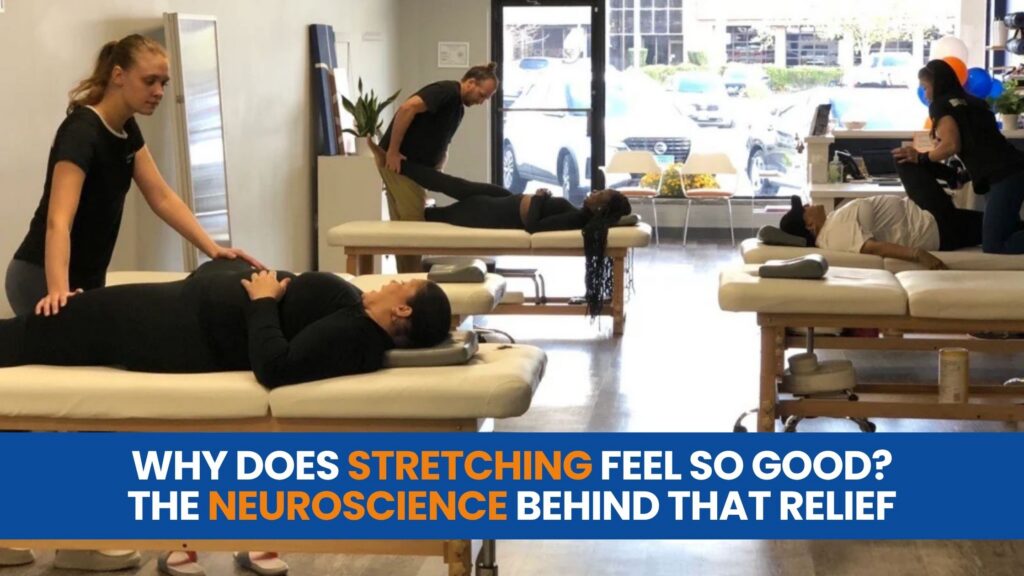
An even better, more premium experience is assisted stretching. Having someone else stretch you out is wonderful! Why? Well, with assisted stretching:
- the client does not have to fight to hold a position
- the Body Coach controls the angle and intensity
- the client can relax more fully
- stretches can reach areas that are difficult to address alone
In our StretchPlex studios here in Delaware, for example, a client comes in after sitting at a desk all week with tight hips and shoulders. They may walk in feeling stiff, but after a guided session they notice that turning, standing, or reaching feels easier. I myself feel like a wet noodle after I get stretched out. AHHHH!
9. Benefits of Stretching Beyond Feeling Good
Regular stretching may help support:
- better flexibility
- improved range of motion
- easier everyday movement
- reduced feelings of stiffness
- improved mobility
- more comfortable exercise and activity
10. Closing: Your Body Likes Movement
We are all very well designed machines — machines that are meant to move! The good feeling after stretching is your muscles, joints, brain, and nervous system working together.
If stretching on your own feels inconsistent, uncomfortable, or you are not sure what to do, assisted stretching gives you a guided way to work on mobility and flexibility.
Frequently Asked Questions
1. Why does stretching feel good almost immediately, even before flexibility actually improves?
Because most of the relief comes from your nervous system, not your muscle length. Muscle spindles tell your brain the stretch is safe, and your nervous system responds by dialing down protective tension right away — long before any real change happens in the muscle tissue itself.
2. What’s the difference between stretching on your own and assisted stretching?
When you stretch alone, your muscles have to work to hold the position, which limits how much they can fully relax. With assisted stretching, a trained Body Coach controls the angle and intensity, so your muscles can let go completely instead of bracing — that’s why it feels so different.
3. Can stretching too hard actually make tightness worse?
Yes. Aggressive stretching can trigger your nervous system’s protective response, causing muscles to tense back up rather than release, which often leaves you sorer the next day. A gentle, gradual approach works better than pushing hard.
4. How often should I stretch to see real improvements in mobility?
Consistency matters more than intensity. Short, regular sessions teach your nervous system that a wider range of motion is safe, which builds lasting flexibility better than occasional, aggressive stretching sessions ever will.