


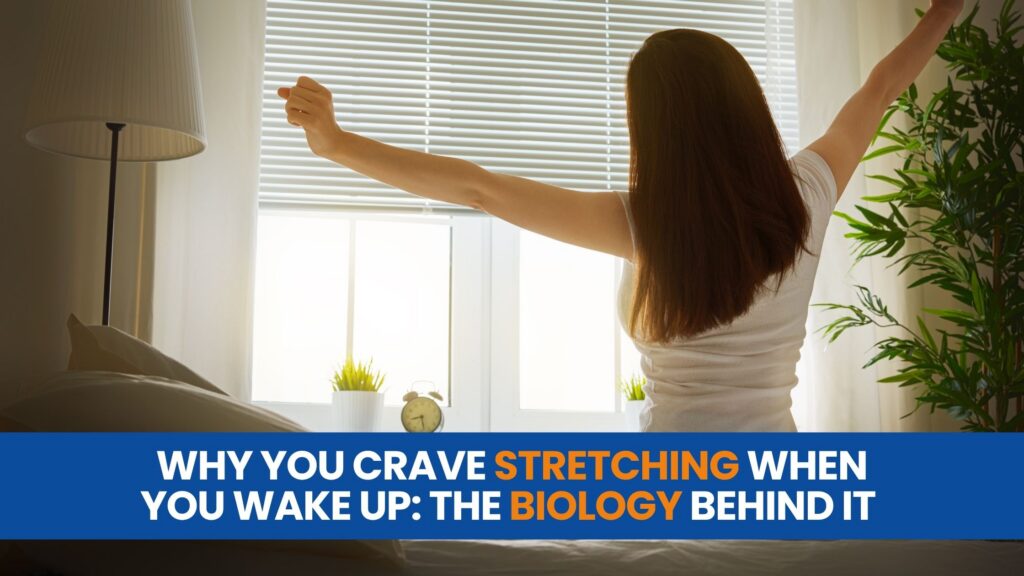
You crave stretching when you wake up because your muscles sat still all night. Joint fluid gets thick. Blood flow slows down. So, your nervous system fires an automatic wake-up reflex called pandiculation. It resets your muscles and gets you ready to move. It’s biology. Not a bad habit.
That first stretch of the day arms up, back arching, maybe a little groan isn’t random. Your body’s been asking for it since before you opened your eyes.
What Happens in Your Body Overnight
Sleep is not rest for your muscles. Not really. Your muscle fibers barely move for six, seven, eight hours straight. Blood flow to those tissues slows way down. The fluid inside your joints gets thick too. Kind of like oil in a car left out in the cold.
Your body notices this. Every single morning. In every mammal on the planet.
Pandiculation: The Real Name for That Urge
That yawning, full-body stretch has a name. Most people never hear it: pandiculation. Your spinal cord runs this reflex. Not your conscious mind. It resets tight muscles before you’ve even had coffee. It’s the same reflex behind your dog’s big stretch the second it hops off the rug.
Here’s how it works. Tiny sensors sit inside your muscles. They track muscle length and send signals to your spine. A long night of stillness scrambles those signals a bit. A big stretch fixes it. That’s why the urge feels automatic. Because it mostly is.
Want to see this reflex used with real skill? Hands-on flexibility therapy uses this same reset. It’s just far more precise than a solo morning stretch.
Your Nervous System Does More Than You’d Guess
Morning stretching isn’t just about loose muscles. It’s a full nervous system event.
When you stretch, your calming nervous system gets a nudge. Your body also releases a burst of cortisol right around waking. Stretching pulls both of those together. It moves you from sleepy and slow to alert and upright.
I’ll say it plainly: your body uses movement to switch gears. Whether you plan for it or not.
That’s part of why a good stretch feels almost good, even on a stiff morning. Sensors that track your body’s position go quiet overnight. Stretching flips them back on. Your brain rewards that with a small hit of feel-good chemicals. People who try deep muscle vibration massage often feel a similar wave of relief. It’s just triggered from the outside instead of by a yawn.
Why the Urge Hits Harder Some Mornings
Not every morning brings the same craving. A few things change it:
- Sleep position. Side-sleepers curled up tight tend to wake up wanting a longer stretch.
- Yesterday’s workload. A hard workout or a long day at a desk leaves muscles begging for relief.
- Water intake. Dry, dehydrated muscle is stiffer. Stiff muscle triggers a louder urge.
- Age. Muscles lose some stretch over time. So the craving tends to grow as you get older.
If your mornings feel rough more often than not, tight muscles might be the real cause. A solid one-on-one mobility coaching plan can fix that. Not just cover it up.
Turn the Reflex into a Real Habit
Here’s the part most people skip. That automatic morning stretch hands you a free two-minute window of motivation. Most of us waste it scrolling.
Try this instead:
- Stretch before you check your phone. Your body is primed right then.
- Hold each stretch for 20 to 30 seconds. Not two.
- Breathe slow. It deepens the calming effect.
- Start with your tightest spot. Your body already knows where.
Want a longer-term plan? Flexibility training program details show how steady sessions build on that reflex. No fading by 9 a.m.

When It’s a Warning Sign, Not Just a Craving
A little morning stiffness is normal. Nothing to worry about. But stiffness that sticks around past 30 minutes is different. So is stiffness with swelling, sharp pain, or numbness. That combo usually points to something else. Maybe a joint issue. Maybe an old injury. Maybe swelling. Not simple overnight fluid buildup.
Recovery tools help here too. Many athletes pair stretching with muscle recovery compression sessions. It moves fluid. It cuts stiffness before it starts. It’s not a swap for stretching. It’s a partner to it.
And if that urge to stretch has turned into real pain? Get it checked. Don’t push through it alone.
The Bottom Line
That morning stretch is not a quirky habit. You didn’t talk yourself into it. It’s your joints, your muscles, and your nervous system, all pulling the same way. Your body has run this exact program since long before humans showed up. Dogs do it. Cats do it. Even birds do it.
So listen to it. Two focused minutes each morning beats a snooze button every time. Want a guide instead of guesswork? Check the stretch therapy membership rates. Or book a free mobility assessment and feel it for yourself.
FAQs
Why do I crave stretching every morning?
Your muscles sit still for hours overnight. Blood flow slows. Joint fluid thickens. Your body answers with pandiculation. It’s an automatic reflex. It resets muscle tension and wakes up your senses. That urge is just your body asking for a reset.
Is it good to stretch right when you wake up?
Yes, for most people. It boosts blood flow and loosens stiff joints. It also works with your natural morning cortisol boost, so you feel alert faster. One tip: skip deep, hard stretches on totally cold muscles. Ease in for the first minute.
What is it called when you stretch after waking up?
Pandiculation. That’s the term for the yawn-and-stretch reflex seen in almost all animals with a spine. It’s automatic, run by your nervous system, not a choice you make.
Why do animals like cats and dogs stretch when they wake up?
Same reason humans do. Their muscle sensors need a reset after a long stretch of stillness. A big stretch fixes the signal between muscle and spine. It’s shared across mammals. Not something they learned.