

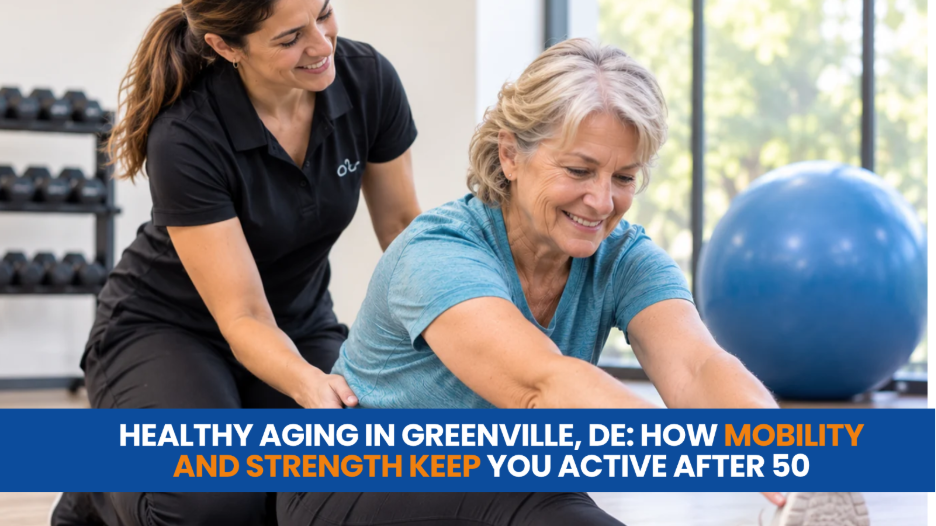
Quick Answer: Stiff in the hip and knee after 50? Chances are good that you’re not experiencing joint or tissue damage, but rather that you’ve lost the ability to move certain muscles and joints through a full range of motion. A certified stretch therapist can identify the restricted areas and get you moving again with assisted stretching, strengthening through the weak muscles, and finally getting you moving on the stairs, golf course, or on the floor with your grandchildren. Start with mobility, build strength slowly, and check with your doctor first if you have ongoing joint pain or swelling.
Why Do Your Hips and Knees Start Feeling Older Than You Are?
Hips and knees are the hardest-working joints in your body, and they depend heavily on the muscles around them. Years of desk work, driving, and sitting in the evening shorten the hip flexors and weaken the glutes. Your knees then absorb stress that the hips should be sharing. It’s a chain reaction, and the knee that aches are often reacting to a hip that no longer moves well.
Age plays a role, too. Muscle mass and tissue elasticity naturally decline as we get older unless we give the body a reason to maintain them. Connective tissue tends to feel stiffer, and recovery from a long walk or a round of golf takes longer. None of this means you should stop moving. It means the way you move, and how you prepare and recover, matters more than it did at 35.
It’s also worth saying that persistent joint pain, swelling, or pain at night deserves a conversation with your doctor before you start any stretching program. Stretching and strength work are well suited to stiffness and reduced mobility, but they aren’t a substitute for a medical diagnosis.
The Everyday Moves Worth Protecting: Stairs, Getting Off the Floor, and a Full Golf Swing
Fitness goals sound abstract until you attach them to a specific task. Most people we’d describe as “healthy agers” aren’t chasing a number on a scale. They want to carry laundry up the stairs without gripping the railing, get up from the floor without planning the exit, and rotate through a golf swing without feeling pinched in the lower back.
Each of those movements asks something different of your body. Stairs demand hip and knee strength along with ankle mobility. Getting off the floor tests balance, core strength, and the ability to shift weight smoothly. A full golf swing needs thoracic spine rotation and hip mobility working together, which is why a stiff hip so often shows up as a sore lower back on the course.
This is where a stretch therapist can be especially useful. Rather than guessing what’s tight, they can watch how you move, find where the limitation actually sits, and work on that area. Many people are surprised to learn that the muscle they’ve been stretching at home for months wasn’t the one holding them back.
What a Certified Stretch Therapist Actually Does?
Searching for a certified stretch therapist in Greenville is a sensible starting point, but it helps to know what you’re looking for. A good practitioner begins with a conversation about your goals, history, and any pain or past injuries. From there, they guide your body through targeted stretches, often using assisted techniques that let you relax into a range of motion you couldn’t reach alone.
Because credentials differ from one provider to another, don’t hesitate to ask about a therapist’s training, what certifications they hold, and how they adapt sessions for clients over 50. A good provider will welcome those questions. You can also read about what StretchPlex is and how sessions work before you book, so you know what to expect on your first visit.
Some clients pair stretching with recovery tools. Compression therapy for tired legs, for example, can be a comfortable addition after a long day on your feet or an active weekend.
A Safe Way to Rebuild Strength and Flexibility Without Overdoing It
The most common mistake after 50 is going from nothing to everything. Someone feels motivated, signs up for an intense class, and ends up sore for a week and discouraged. A steadier approach works better, and it usually follows a simple order.
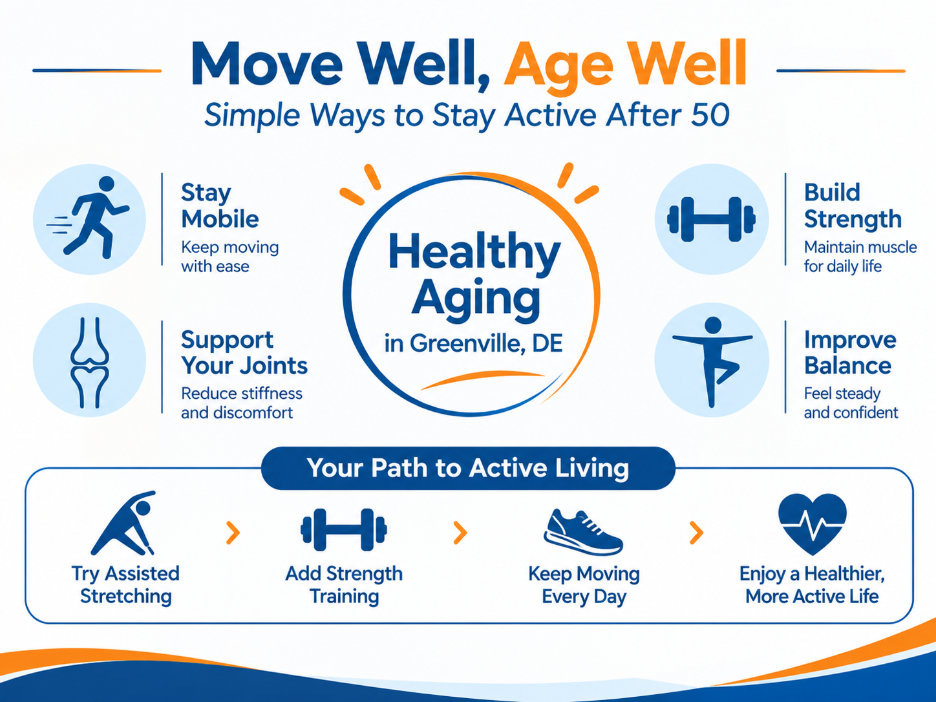
Start with mobility. Restoring range of motion in the hips, ankles, and upper back gives your joints room to work properly, and it often reduces pain on its own. Add strength next, beginning with controlled movements such as sit-to-stands, bridges, and step-ups, so your muscles can support the joints you’re trying to protect. Then build stamina and speed gradually, once the basics feel comfortable.
Consistency counts for more than intensity. Two or three short sessions a week usually beat one punishing workout. If you’d like guidance on progression, personal training designed for older adults can pair strength work with stretching so each supports the other, and you’re never left wondering whether you’re pushing too hard. If you’re comparing options, the pricing page lays out what’s available.
Pay attention to how you feel the next day. Mild muscle soreness is normal. Sharp pain, joint swelling, or soreness that lingers beyond two days is a signal to scale back and check in with a professional.
Staying Active Is About Keeping Your Options Open
Aging well isn’t about avoiding every ache. It’s about keeping the freedom to do the things you enjoy, whether that’s the stairs, the garden, or a Saturday round of golf. Hips and knees respond well to attention, and small, consistent changes often make a bigger difference than people expect.
Frequently Asked Questions
1. Is stretching safe if I haven’t exercised in years?
For most people, yes, when it’s done gently and progressively. Tell your therapist about any surgeries, medications, or health conditions beforehand, and check with your doctor first if you have concerns about your heart, joints, or balance.
2. How often should I stretch to notice a difference?
Many people feel looser after a single session, but lasting change usually comes from regular practice over several weeks. A mix of professional sessions and short daily routines at home tends to work well.
3. Can stretching help my golf game?
Better hip and spine mobility can make it easier to rotate through your swing and may reduce end-of-round stiffness. It won’t fix your slice, but it can give your body the freedom to do what you’re already trying to do.
4. What should I look for in a stretch therapist near Greenville?
Ask about their training and certifications, whether they have experience with clients over 50, and how they assess your movement before starting. A personalized plan matters more than a one-size-fits-all routine.