

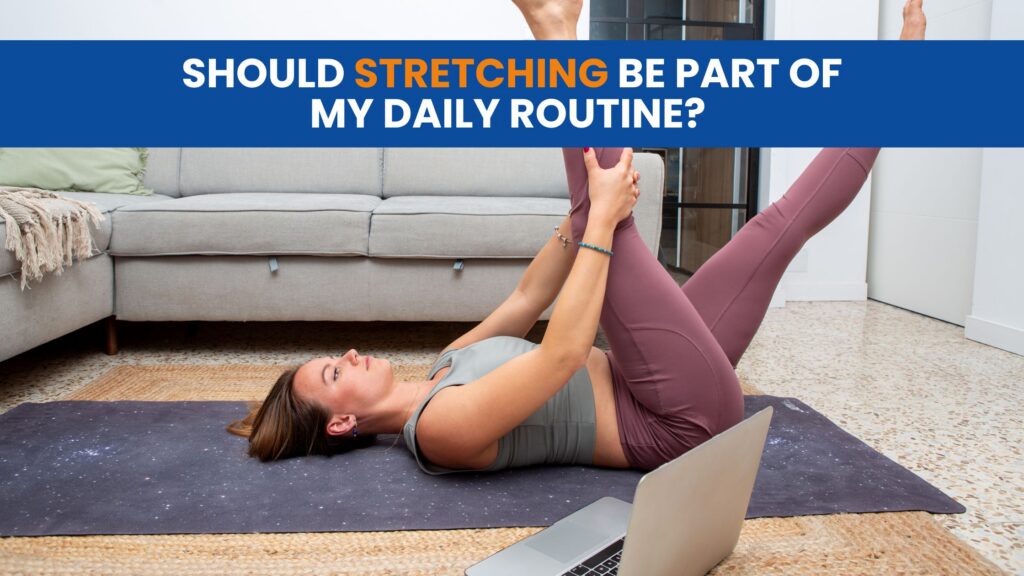
Quick Answer: Yes. Five to ten minutes of daily stretching improves flexibility, blood flow, posture, and stress levels – and it takes less time than scrolling through your phone in bed. Even short morning or evening stretch sessions build mobility over weeks, not months.
Most people treat stretching like flossing. They know it matters. They skip it anyway.
Here’s the thing: your muscles tighten every single day, whether you exercise or not. Sitting at a desk for eight hours shortens your hip flexors. Staring at a screen rounds your shoulders. Sleeping wrong twists your spine. None of that reverses itself. You have to actually move.
I’ve watched clients at StretchPlex walk in stiff as a board and walk out standing taller after one session. That’s not magic – it’s just consistent with mobility work, blood flow, and muscle elongation doing what they’re supposed to do. A few minutes a day adds up faster than most people expect.
What Daily Stretching Actually Does to Your Body
Stretching isn’t just about touching your toes. It’s joint mobility, muscle elasticity, and nervous system regulation working together. When you stretch regularly, your range of motion (ROM) increases, your circulation improves, and cortisol – your stress hormone – actually drops. That’s not fluff. It’s measurable.
Tight hamstrings pull on your lower back. Tight hip flexors flatten your glutes and wreck your posture. Tight chest muscles round your shoulders forward. Stretching breaks that chain reaction before it turns into chronic pain.
And here’s something most blogs skip: stretching also improves proprioception – your body’s sense of where it is in space. Better proprioception means fewer trips, fewer rolled ankles, and better balance as you age.
Stretching Before vs. After a Workout – They’re Not the Same Thing
Dynamic stretching (leg swings, arm circles, walking lunges) before exercise warms muscles and primes them for movement. Static stretching (holding a position) is better saved for after your workout, when muscles are already warm and pliable.
Mixing these up is a common mistake. Static stretching cold muscles can actually reduce short-term power output. Save the long holds for post-workout recovery, where they help flush lactic acid and ease soreness.
If you train at a personal training studio or work with someone on program basics, ask them to build a proper warm-up and cool-down structure – most generic gym routines skip this entirely.

Finding a Stretching Routine You’ll Actually Stick With
Forget the 45-minute yoga flow if you don’t have the time. Static holds of 15-30 seconds, done consistently, beat an occasional hour-long session every time.
Try this:
- Morning: 3-5 minutes of gentle dynamic stretches to wake up muscles
- Midday: A 2-minute desk break stretch – neck rolls, shoulder shrugs, seated spinal twist
- Evening: 5-10 minutes of static holds, focused on hips, hamstrings, and lower back
That’s it. No fancy equipment. No 6 a.m. alarm. Just a rhythm your body can count on.
Some people prefer guided sessions instead of figuring it out alone. Assisted stretching – where a trained professional moves your body through ranges you can’t reach solo – tends to get faster, deeper results. At StretchPlex, most clients feel a noticeable difference after a single 25-minute session, which is a big reason people come back weekly instead of “someday.”
What Actually Stops People from Stretching Daily
Time, mostly. Or rather, the excuse of time – five minutes isn’t a real time problem; it’s a priority problem.
The second blocker is a technique. People don’t know if they’re stretching the right muscle, holding it long enough, or doing more harm than good. That uncertainty kills consistency faster than busy schedules do.
Solution? Set a recurring phone reminder. Two minutes at 10 a.m. and 3 p.m. Or better – book a session with a studio that specializes in assisted stretching so a professional shows you exactly where your tightness lives. Once someone points it out, it’s hard to ignore.
Bottom Line
Daily stretching is cheap, fast, and backed by real physiology – improved circulation, reduced muscle tension, better posture, and lower stress hormones. You don’t need an hour. You need five honest minutes and a reason to keep showing up.
If you’d rather have a guided plan than wing it alone, book an appointment and let someone map out a routine built around your actual tight spots – not a generic YouTube video.
FAQs
How long should I stretch each day?
Five to ten minutes is enough for most people. Consistency beats duration- daily 5-minute sessions outperform a single 45-minute stretch once a week.
Is it better to stretch in the morning or at night?
Both work, but fordifferent reasons. Morning stretching wakes up stiff joints after sleep. Evening stretching releases tension built up during the day and can improve sleep quality.
Can stretching alone improve posture?
Yes, partially. Stretching tight muscles (chest, hip flexors) combined with strengthening weak ones (upper back, glutes) gives the best results. Stretching alonehelps but pairing it with personal training speeds things up.
Isassistedstretching better than stretching alone?
For most people, yes – a trained professional can move your body through ranges you physically can’t reach by yourself, which means deeper results in less time. Check out assisted stretching services if you want faster progress than solo stretching gives you.