

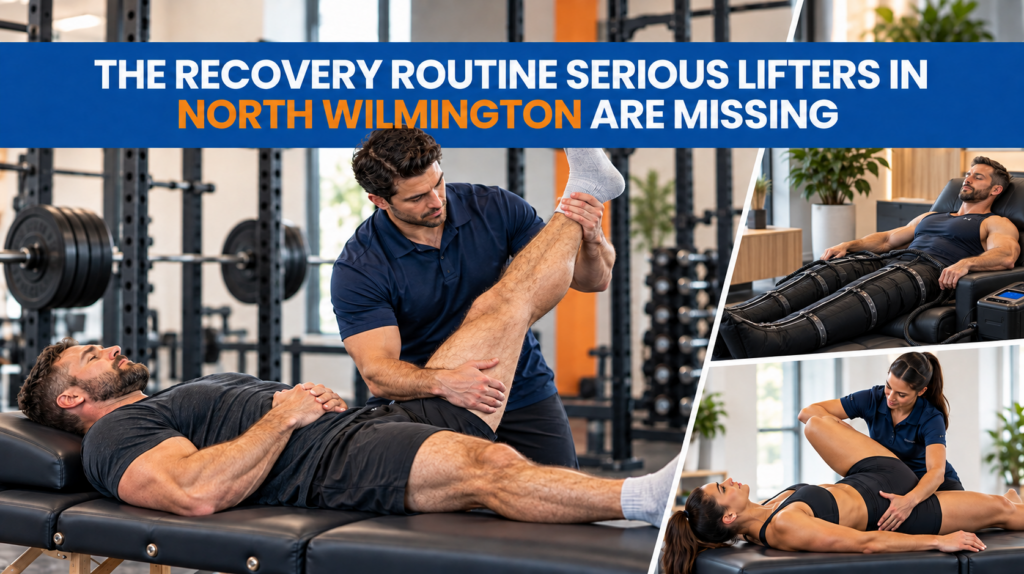
The missing piece is structured mobility work. Most serious lifters train hard, eat well, and sleep enough, but they skip a planned routine that keeps their joints moving well. A simple weekly plan fixes this. It mixes easy movement, targeted mobility drills, recovery tools, and one guided assisted stretching session. This helps you lift better and feel less beat up.
You never miss a session. Your training log is tidy. Your meals are on point. So why do your hips ache, your shoulders feel tight, and your lifts stall?
Often the answer is not more effort. It is a gap in your recovery. Most lifters plan every set and rep, then leave mobility to chance. A few random stretches after a workout do not count as a plan. If you want a plan that works, mobility training in Wilmington, DE can give you a place to start.
Why Lifters Skip Mobility
Let’s be honest. Mobility work is not exciting. You cannot brag about a deep hip hinge the way you can brag about a new deadlift max.
There is also a common belief that lifting alone builds all the flexibility you need. Lifting through a full range can help. But heavy training also builds tension. Over months, that tension can stack up and limit how well your joints move.
Time is another issue. After a long session, most people want to grab a shake and go. Recovery gets squeezed out. The trouble is that small stiffness problems turn into bigger ones. If you are new to guided work, our program basics page shows how simple a session can be.
What a Real Recovery Routine Includes
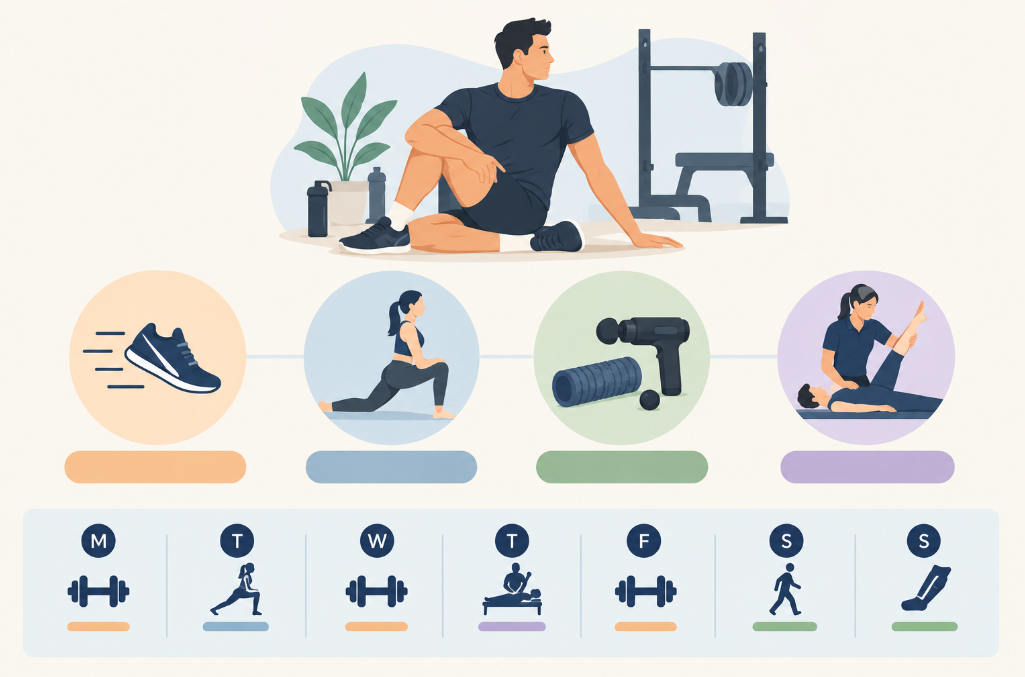
A good routine is not complicated. It has four parts, and each one has a job.
- Easy movement. A walk or light bike ride on rest days boosts blood flow. It helps muscles feel less stiff without adding stress.
- Targeted mobility drills. These are short, focused moves for your tightest areas. Think hip openers, thoracic spine rotations, and ankle work.
- Recovery tools. These help your body calm down between hard sessions.
- Guided work. This is where a pro helps you go deeper than you can alone.
Miss any one of these and the routine has a hole. Most lifters do a bit of the first and second, then skip the rest.
The Piece Most Lifters Miss: Guided Work
Here is the honest truth. It is hard to relax fully when you stretch alone. Part of you is always holding the position. That keeps the muscle switched on.
With assisted stretching, a trained practitioner moves your body for you. You breathe and let go. Because your muscles can relax, the stretch can reach deeper, especially around the hips, hamstrings, and lower back.
This matters even more for lifters. Squats, deadlifts, and presses all demand good joint range. When your hips and shoulders move well, your form gets cleaner, and cleaner form means fewer nagging aches. Curious about the approach? Read about what StretchPlex is and how we work.
Add Recovery Tools to Your Week
Tools are the fourth leg of the table, and they fit well between guided sessions.
Percussion therapy uses fast, gentle pulses to help tight muscles settle. Many lifters like it for sore quads, glutes, and upper back.
Compression therapy uses air pressure around your legs. It can leave your legs feeling lighter after a heavy squat day.
Neither tool replaces good sleep or good food. But together with mobility work, they round out your recovery.
Fix the Root: Your Hips and Hamstrings
Many lifters feel tight in the same place: the back of the legs. Your hamstrings attach to your pelvis. When your hips are stiff, your hamstrings often pay the price. We break this down in Why Your Hamstrings Stay Tight No Matter How Much You Stretch After Leg Day.
Tools also matter here. A roller is handy, but it has limits, especially around deep hip tissue. See Foam Rolling vs. Assisted Stretching: Why One Actually Reaches Your Hips for the full comparison.
A Simple Weekly Plan You Can Start Now
Here is an easy template. Change it to fit your training split.
Monday (heavy lower body): Warm up well. After lifting, keep it easy. Walk and breathe.
Tuesday: Ten minutes of hip and ankle drills. Add percussion therapy on sore spots.
Wednesday (upper body): Add thoracic spine and shoulder mobility before you lift.
Thursday: Book a guided assisted stretching session. This is your deep reset for the week.
Friday (lower body): Warm up with hip openers and glute bridges.
Weekend: Light activity. Use compression therapy if your legs feel heavy.
This plan takes little time. Yet it covers every part of the routine. If you want help tuning it to your lifts, our personal training team can build a plan with you.
Ready to Close the Gap?
If you have been lifting hard and recovering on autopilot, this is your sign to change one thing. Start with a guided session and see how your body responds.
Try our intro assisted stretching session or claim a free stretching demo. Then check the session pricing and book your appointment when you are ready.
Frequently Asked Questions
What is the best recovery routine for lifters?
The best routine mixes easy movement on rest days, short mobility drills, recovery tools, and guided stretching once or twice a week. Good sleep and enough protein support all of it. Keep it simple so you can stick with it.
How often should lifters do mobility work?
Short sessions of 10 to 15 minutes, three to four times a week, work well for most people. Add a longer guided session weekly or every other week. Adjust based on how heavy your training is and how your body feels.
Does stretching help muscle recovery after lifting?
Gentle stretching can help muscles feel less stiff and support your range of motion. It will not replace rest, sleep, or good food. Go easy right after a hard session and save deeper stretching for later.
Is assisted stretching worth it for weightlifters?
Many lifters find it useful, especially for tight hips, hamstrings, and shoulders. A trained practitioner helps you relax and reach ranges that are hard to hit alone. If you have an injury or medical condition, check with your doctor first.