


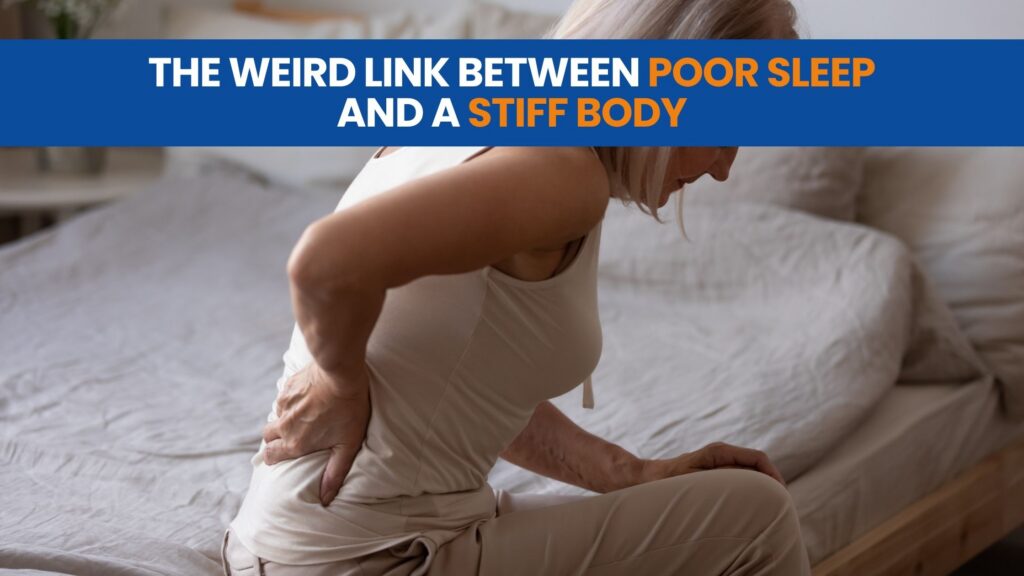
Poor sleep raises inflammation, tightens muscles, and slows the repair work your body does overnight so the less you sleep, the stiffer and more sore you wake up. Fix the sleep, and a lot of that morning tightness fades on its own.
Wake up feeling like you slept on a plank of wood? You’re not imagining it. Poor sleep and a stiff body are tangled together in a way most people never connect. You blame the mattress. You blame your workout. Rarely do you blame the five hours of broken sleep from the night before.
But poor sleep may be part of the problem, especially if your stiffness seems worse after restless nights.
Here’s the short version: your body does its deepest repair work during specific sleep stages. Cut those stages short, and muscles don’t fully recover. Inflammation can creep up. Your joints may feel tight before you’ve even gotten out of bed. It’s not just fatigue it’s a physical process, and it happens more often than most active adults realize.
If you’ve been chasing flexibility through workouts alone, you might be missing a piece that ties it all together. That’s where hands-on, therapist-guided assisted stretching earns its place not as a replacement for sleep, but to help undo some of the tightness poor sleep leaves behind.
Why Sleep Loss Turns into Muscle Tightness
Deep sleep, the slow-wave stage, is when your body releases most of its growth hormone. That hormone supports tissue repair. Skip enough deep sleep and your muscles don’t get the same opportunity to rebuild.
There’s more to it. Sleep deprivation is linked to spikes in cortisol, your stress hormone. Elevated cortisol can keep muscles in a low-grade state of tension think of it as your body staying half-braced for a threat that never shows up.
This is also part of why athletes who train hard but sleep poorly often plateau or get hurt more easily. Recovery isn’t just about protein shakes and rest days sleep quality is part of the whole equation, not an afterthought bolted on at the end.
The Inflammation Connection Nobody Talks About
Short sleep windows have been linked to a measurable rise in inflammatory markers like C-reactive protein. Inflammation is one of the drivers of joint stiffness and muscle soreness, and it can build up when sleep gets skipped night after night.
One bad night probably won’t wreck you. Three or four in a row? That’s often when people start noticing their hips feel locked, their lower back aches getting out of bed, and stretches that used to feel easy suddenly feel like a fight.
Compression therapy can also feel good when your legs are tired or heavy. Pneumatic compression applies rhythmic pressure to the legs and may support circulation and help reduce the feeling of post-exercise soreness a nice complement on weeks when sleep hasn’t cooperated, though it’s not a substitute for addressing the sleep itself.
The Nervous System’s Role in Morning Stiffness
Your nervous system helps regulate muscle tone even while you’re unconscious. Poor sleep can disrupt the parasympathetic “rest and digest” state your body relies on to relax muscle fibers overnight. Instead, you may stay in a slightly activated state not fully alert, but not fully at ease either.
That half-tense state is one reason some people wake up with clenched jaws, tight shoulders, or curled-up hands.
Assisted stretching won’t fix poor sleep, but it can address another part of the problem: the tight muscles and limited mobility that make everyday movement uncomfortable. If you’re curious how sessions work, our morning stretch routine is a good place to start on your own.

Try This When You Wake Up Stiff
Before you reach for the foam roller, try a gentler sequence first:
- Drink some water.
- Walk around for two or three minutes before stretching anything hard.
- Do 5 slow shoulder rolls.
- Gently bring each knee toward your chest.
- Try a light hip-flexor stretch.
- Move through 5–8 easy bodyweight squats if that feels comfortable.
- If one area stays persistently tight day after day, have someone assess your movement rather than endlessly stretching around it.
How to Break the Cycle
Stiffness makes it harder to get comfortable at night. Discomfort at night can wreck your sleep. Wrecked sleep can make you stiffer the next day. Round and round it goes.
Breaking it usually takes two moves at once: improving sleep hygiene and actively working on flexibility, rather than waiting for one to fix the other. A consistent bedtime, less screen time before bed, and a short wind-down stretch routine all help. So does professional-guided stretching that targets the specific areas holding tension hips, lower back, shoulders, whatever’s tightest for you.
A quick note: if morning stiffness lasts a long time, is getting progressively worse, or comes with joint swelling, weakness, numbness, or significant pain, talk with your healthcare provider. Not all morning stiffness is simply tight muscles.
Your Morning Stiffness Is Trying to Tell You Something
Poor sleep isn’t just about feeling tired. It can affect how your muscles recover, how your nervous system regulates tension, and how much inflammation builds up in your joints overnight. Improve the sleep side of the equation, and a fair amount of daily stiffness may improve along with it.
Still, sleep alone won’t undo years of tight hips or a locked-up lower back. That takes hands-on work. Ready to see what consistent, guided flexibility work does for your mornings? Book your first appointment and find out firsthand.
FAQs
Can bad sleep really make my body stiffer?
It can contribute. Poor sleep is linked to increased inflammation and cortisol, along with less time in the deep-sleep stage your muscles rely on to recover. The result can be real, physical stiffness not just tiredness.
Does stretching before bed help you sleep better?
It may. Gentle stretching can lower muscle tension and help shift your body into a calmer state, which can make it easier to fall and stay asleep.
Why do I wake up stiff even after a full 8 hours of sleep?
Sleep quality matters as much as duration. If you’re not spending enough time in deep, slow-wave sleep, your muscles may not fully recover even after a long night.
Can improving my sleep make me more flexible over time?
Better sleep won’t replace stretching, but it supports the recovery process that helps flexibility gains stick. Combining good sleep with regular stretch sessions tends to give the best results.