


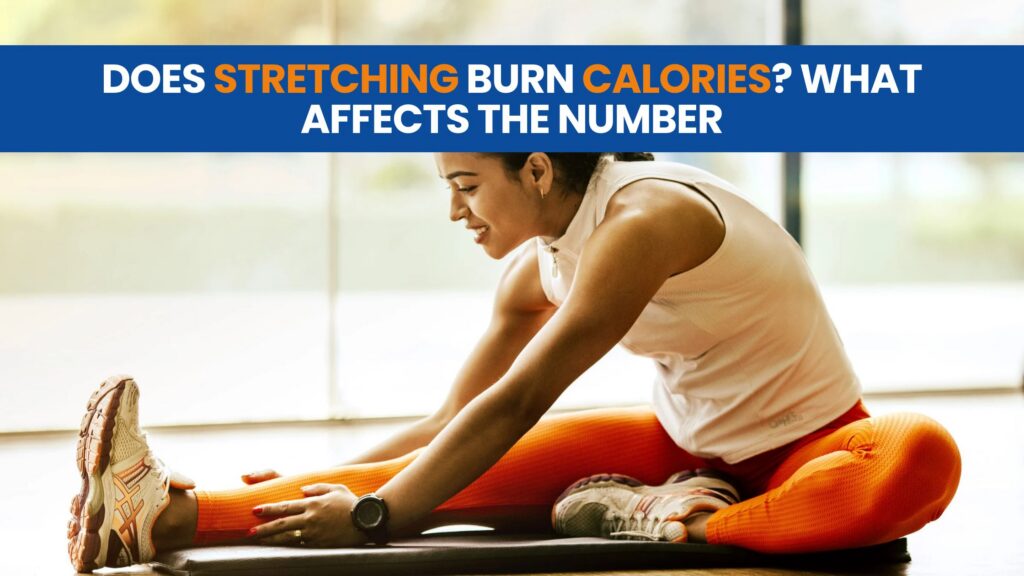
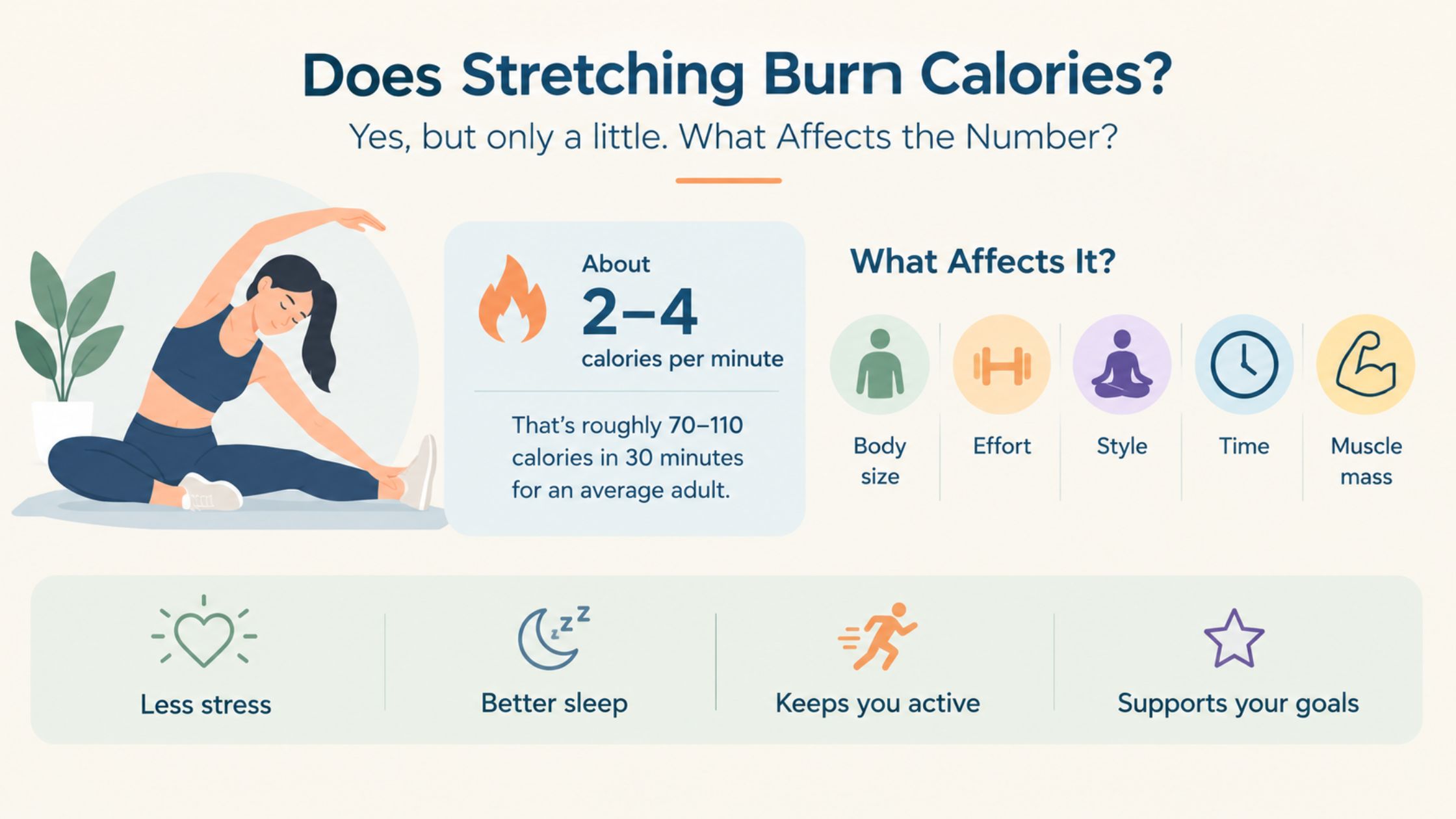
Yes, but only a little. Gentle stretching burns about 2 to 4 calories a minute. That’s roughly 70 to 110 calories in 30 minutes for an average adult. Your body size, how hard you work, and how long you go all change the final number.
You finish a long stretch session. You feel warm. Maybe you even break a light sweat. So did you just burn off lunch? Not quite. Plenty of people ask does stretching burn calories because it feels like real work. And it is real work, just gentle work. Your muscles, heart, and lungs all pick up the pace a notch. That bump is genuine. It’s also small, so let’s look at where the number comes from and what pushes it up or down.
Where the Number Comes From
Researchers rate activities in METs. One MET is what you burn sitting still. Easy stretching and slow yoga land near 2.3 METs, which means you burn a little more than double your resting rate.
The math is simple. Multiply METs by your weight in kilograms, then by the hours you spend. For a 155-lb (70 kg) adult, half an hour of gentle stretching comes out near 80 calories.
Here’s the catch. That same person burns about 35 calories just sitting on the couch for 30 minutes. So the extra burn from stretching is closer to 45. That’s about six almonds. Anyone who starts a daily stretching routine for weight loss alone will be disappointed, and it’s better to know that up front.
Five Things That Change the Number
Not every stretch session burns the same. These factors do most of the work:
- Body size. A bigger body moves more mass, so it burns more. A 200-lb person burns noticeably more than a 120-lb person doing the exact same moves.
- Effort. Slow holds ask less of you than flowing, active moves. More effort means more calories.
- Style. Static holds sit at the bottom of the scale. Dynamic and flow-based work climbs higher.
- Time. Forty-five minutes beats fifteen. It’s basic, but people forget it.
- Muscle mass. Muscle burns more at rest than fat does, so stronger people start from a higher base.
Here’s a rough picture for a 155-lb adult. Treat these as ballpark figures, since no two bodies match.
| Stretching style (30 min) | Effort | Approx. calories |
| Gentle static holds | Low | 70–90 |
| Slow yoga-style flow | Low to moderate | 90–130 |
| Active, dynamic stretching | Moderate | 100–150 |
Why the Burn Stays Low
Picture a long hamstring hold. You’re lying still. Your muscle is lengthening, but it isn’t working hard, and your heart rate barely moves. The only real motion happens in the few seconds you spend switching poses.
That’s why dynamic moves, like leg swings and walking lunges, burn more than static holds. They keep big muscles busy and your pulse up. They also belong at a different time. The difference between warming up and stretching is simple: move first, hold later.
Honestly, I wouldn’t chase extra calories by rushing your stretches. Speed makes you sloppy, and sloppy stretching doesn’t help your flexibility.
Easy Ways to Raise the Burn
You don’t need to turn stretching into cardio. A few small tweaks are enough:
- Stand up more. Standing stretches use your legs and core, which burns more than lying on a mat.
- Flow between poses. Link moves together instead of resting for a minute after each one.
- Keep your holds honest. About 30 seconds works for most people, and how long to hold a stretch explains why longer isn’t always better.
- Go longer. Stretch for 30 to 45 minutes instead of ten.
- Try a full routine. A full body stretch routine hits every major muscle group, so you spend more time moving.
Will this turn stretching into a fat-burner? No. But it nudges the number in the right direction.
What Calories Can’t Measure
Here’s where stretching earns its spot. Weight loss depends on habits, and stretching helps with the habits that quietly fall apart.
It calms you down. Slow breathing tells your body to ease off, which is one reason stretching feels so good at the end of a rough day. Lower stress often means fewer late-night snack runs.
It helps you rest. Short sleep drives hunger. And tight muscles make it harder to sleep, as poor sleep and a stiff body show. A five-minute wind-down can break that loop.
It keeps you training. Sore, stiff muscles are a top reason people skip workouts. Skip enough of them and your plan stalls. Loosening up keeps you showing up.
Just avoid the usual traps, like bouncing or pushing into pain. These common stretching mistakes cause more setbacks than most people expect.
When a Little Help Makes Sense
Some people stretch on their own and feel great. Others hit a wall. Old injuries, long desk days, or simple doubt about technique can keep you stuck.
That’s where assisted stretching comes in. A trained therapist moves your limbs while you relax, so you reach ranges that are hard to reach alone. You can read about the benefits of assisted stretching before you decide. And if weight loss is the real goal, personal training can build strength, cardio, and flexibility into one plan.
Stretching won’t win a calorie contest. It doesn’t have to. Use it to feel better and move better, and let walking and lifting do the heavy lifting. Ready to try it with a pro? Book a session and see the difference yourself.
Frequently Asked Questions
How many calories does stretching burn in 30 minutes?
Gentle stretching burns roughly 70 to 110 calories in 30 minutes for an average adult. Heavier people burn more. Active, flowing stretches burn more than slow holds. Even so, a brisk walk of the same length usually beats it.
Does stretching burn belly fat?
No. Your body can’t pull fat from one spot, and stretching burns too few calories to matter much. It can still help in other ways. It eases stress, improves sleep, and keeps you active. Real fat loss comes from a steady calorie deficit, plus cardio and strength work.
Does stretching burn more calories than sitting?
Yes, but the gap is small. Stretching roughly doubles your resting burn. For a 155-lb adult, that’s about 45 extra calories in half an hour. It beats sitting. It won’t replace a workout.
Does yoga burn more calories than stretching?
Usually, yes. Flowing yoga keeps you moving and uses harder poses, so it burns more than simple static stretching. Gentle or restorative yoga lands close to stretching. The more you move, the higher the number climbs.