
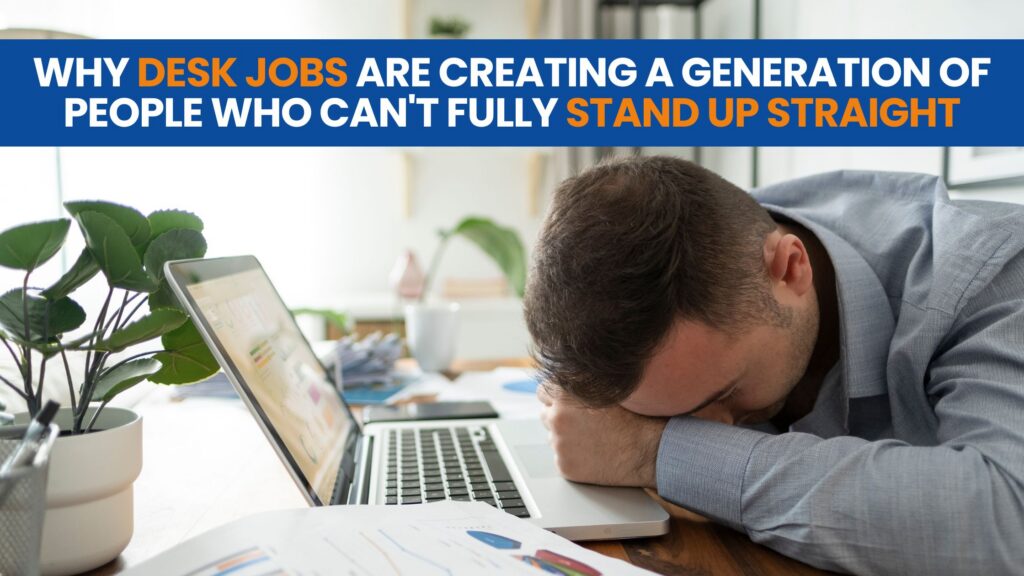
Most people leave work stiff. Shoulders rounded. Head tipped forward. Hips locked tight.
Stand up after eight hours at a desk and your body doesn’t just snap back. It takes a few steps, maybe a stretch, before things feel normal again.
This used to be an “older adult” problem. Not anymore. We see it in people in their 30s, 40s, and 50s at StretchPlex every week.
Hours in a chair slowly reshape how your body moves. Some muscles tighten. Others go quiet and weak. Standing tall starts to feel like work. That’s not a mystery it’s muscle imbalance, and it’s fixable with the right posture correction plan. This even happened to me once I started sitting more at my own desk.
You haven’t forgotten how to stand up straight. Your body just adapted to the position it sits in the most.
Your Body Gets Good At What You Do Most
Add up your day. Sitting at work. Sitting in the car. Sitting through dinner. Sitting in front of the TV. Even a solid 30-minute workout can’t undo eight hours of a sedentary lifestyle.
Here’s what happens when you sit too long:
- Hip flexors stay shortened
- Glutes go idle
- Chest and shoulders tighten
- Upper back rounds forward
- Neck creeps toward the screen
- Ankles and calves stiffen
Your nervous system starts treating that slumped shape as the default.
Then you stand up. And those tight spots don’t release on command. Hips stay slightly bent. Shoulders stay rounded. Your lower back tightens up trying to cover for hips that won’t open. If you’ve ever thought, “I can’t fully straighten up,” that’s exactly why. Explore how assisted stretching targets this pattern directly.
Tight Hip Flexors Can Pull You Forward
The hip flexors sit at the front of your hips. They lift your legs and drive your stride when you walk.
Sit for hours, and these muscles stay shortened the whole time.
Over months and years, tight hip flexors from sitting make it harder to bring your hips into a fully upright position. Instead of standing tall, you lean slightly forward — and your lower back absorbs the extra load.
Think about a normal day. You sit at breakfast. You sit driving to work. You sit at your desk. You sit at lunch. You sit driving home. You sit at dinner. You sit watching TV.
That’s a lot of sitting.
One client at StretchPlex came in because he noticed himself leaning forward while walking. Active guy, still playing golf on weekends. But years behind a desk had locked up his hips, and he figured he just needed to “fix his posture.” Wrong diagnosis. During his sessions, we focused on opening the front of the hips, restoring rotation through the upper back, and strengthening the muscles that hold him upright once the tightness releases. Learn more about how personal training pairs with mobility work for cases like his.
After a handful of visits, he told us getting out of the car felt different. Easier. No more shuffling around for the first few steps to “loosen up.”
That’s a common story here. The problem usually isn’t effort. It’s a lack of movement in the areas that actually need hip mobility and thoracic spine rotation, mainly.
Our favorite fix for this one: lie face-down for five minutes the moment you get home from work, and again before bed. It’s a simple prone extension that reverses that bent-hip posture your body held all day.
Rounded Shoulders Are More Than a Cosmetic Problem
Rounded shoulders are easy to spot in a mirror. But they affect you more than how you look.
Keep your arms in front of you all day typing, scrolling, gripping a mouse, and your chest muscles shorten. Meanwhile, the muscles across your upper back go weak and stop firing the way they should.
That combination shows up as:
- Neck tension
- Shoulder tightness
- Upper-back stiffness
- Headaches
- Reduced arm mobility
- Trouble taking a full, deep breath
A lot of people try to muscle their shoulders back into place. It works for about ten seconds. It doesn’t touch the tight muscles causing the collapse in the first place.
Real posture improvement comes from having enough flexibility and strength to hold a better position without white knuckling it. That’s the whole idea behind structured flexibility classes building the range of motion and the strength to actually use it.
Stretching at Home Helps, But Consistency Is Hard
Simple stretches for desk workers genuinely help. Stand up every 30 to 60 minutes. Walk for a couple of minutes. Move your hips and shoulders through their range. Small habits, real results.
Useful moves include:
| Stretch | Target Area |
| Hip flexor stretch | Front of hips |
| Chest-opening stretch | Chest and shoulders |
| Upper-back rotation | Thoracic spine |
| Calf stretch | Lower legs |
| Glute bridge | Glutes and core |
| Wall posture drill | Spinal alignment |
Here’s the catch: most people don’t know which area actually needs attention. They stretch what hurts, not what’s causing the problem.
Someone with lower-back stiffness, for example, might stretch their lower back for months. But the real culprit is often tight hips, sleepy glutes, or a stuck upper back that won’t rotate. That mismatch is exactly where a good program makes the difference someone assesses the whole chain, not just the spot that’s yelling at the loudest.
How Flexibility Classes Can Help Desk Workers
Flexibility classes give you a structure. And accountability which, honestly, is half the battle.
Instead of guessing which stretch to try next, you follow a plan built around how your whole body moves together. A good program isn’t about touching your toes. It’s about function moving well during actual, everyday life.
That means:
- Standing taller without thinking about it
- Turning your head comfortably while driving
- Reaching overhead without pinching
- Getting out of a chair without the grunt
- Walking with a longer, freer stride
- Moving through your day without stiffness
At StretchPlex, clients often walk in saying they feel “tight everywhere.” Once we assess how they actually move, we usually find two or three key areas driving most of the problem.
A desk worker often needs more movement through the hips and chest. A golfer needs better rotation. Someone chasing grandkids around the yard might need leg strength and balance layered on top of flexibility. Every plan looks different see current pricing options to find the format that fits your goals.
The goal was never to force your body into a painful position. It’s to help it move with more ease and more confidence.
Our favorite doorway fix: stand in a doorway, rest your elbows on the frame, and slowly sag your chest through the opening. That deep chest-opening stretch counters hours of forward-reaching posture. It feels like relief, honestly.

Choosing the Right Stretch Place
Not every stretch place delivers the same experience.
Look for a stretch place that pays attention to your goals and your comfort level — not just a generic routine run on a timer. Stretching should feel productive. It should never feel aggressive or unsafe.
A solid stretch place will:
- Ask about your goals and health history
- Watch how you currently move
- Explain exactly what’s tight and why
- Adjust every stretch to your comfort
- Track your progress over time
- Add strength or mobility work where it’s needed
This matters even more once you’re past 50. The goal isn’t extreme flexibility. It’s keeping the movement you need to stay active, independent, and confident for years, not weeks. Our North Wilmington, Greenville, and Hockessin locations each run this same assessment-first approach.
Small Changes Can Protect Your Future Movement
Desk jobs aren’t going anywhere. Stiffness doesn’t have to be your new normal, though.
A few minutes of daily movement adds up. Regular flexibility classes give most people the structure and consistency that stretching alone at home rarely delivers.
You won’t notice your posture shifting day to day. You’ll notice it when everyday tasks start feeling harder than they used to.
Pay attention if you’re struggling to:
- Stand fully upright
- Turn your head while driving
- Reach behind your back
- Walk without stiffness
- Get up after sitting
- Take a full, comfortable stride
Those are signs your body needs more movement. Not more rest.
At StretchPlex, we help clients build flexibility, cut stiffness, and move with real confidence through personalized assisted stretching and training. Check out our services page for the full breakdown or browse more posts on our blog.
Your desk is part of your job. It doesn’t have to shape how your body feels for the rest of your life.
Claim your free stretching demo or book a session today, and take the first step toward a more comfortable, upright you.
Frequently Asked Questions
What causes poor posture from sitting at a desk all day?
Long hours seated shorten your hip flexors, weaken your glutes, and pull your shoulders and neck forward. Over time your body treats that slouched shape as normal, which is why standing up straight starts to feel effortful instead of natural.
Can flexibility classes actually fix rounded shoulders and tight hips?
Yes flexibility classes address the root cause instead of just the sore spot. A structured plan targets the tight hip flexors, weak glutes, and stiff upper back working together, rather than stretching whatever hurts that day.
How is a stretch place different from stretching on my own at home?
A good stretch place assesses how your whole-body moves, adjusts each session to your comfort level, and tracks progress over time. That structure and accountability is usually what home stretching routines are missing.
How often should desk workers doassistedstretching or flexibility training?
Most desk workers see noticeable relief with consistent sessions, paired with standing up every 30 to 60 minutes during the workday. A trainer can build a schedule around your specific tightness and goals.