
What Is Ballistic Stretching?
Ballistic stretching is a stretching technique that uses quick, bouncing movements to push your muscles slightly beyond their normal range of motion. Unlike holding a position (as in static stretching), you use gentle momentum, swinging your legs, arms, or torso, to encourage the muscles to lengthen.
At first glance, this may sound risky, which is why many people ask, “Is ballistic stretching dangerous?” The truth is, when performed incorrectly, it can be. But under proper guidance and control, the ballistic method of developing flexibility is one of the safest and most effective ways to improve mobility and prepare your body for activity (also see What is Assisted Stretching?)
Understanding the Different Types of Stretching Techniques
To see where ballistic stretching fits in, it helps to know the main types of stretching techniques:
- Static Stretching: Holding a stretch in place for 20–30 seconds. Best for cooling down and long-term flexibility (You can also read How Long Should You Hold a Stretch to Increase Flexibility?).
- Dynamic Stretching: Controlled movement that warms up the muscles (for example, leg swings or walking lunges).
- PNF Stretching: A combination of stretching and contracting muscles, usually done with a partner.
- Ballistic Stretching: Rapid, bouncing motions that extend muscles just beyond their resting length.
Each has a purpose. At StretchPlex, we use the right method at the right time. When done correctly, ballistic stretching can safely and powerfully boost flexibility.
Why the Ballistic Method Can Be Safe and Effective

The key to safety lies in technique and supervision. The term “ballistic” can make people think of jerky, uncontrolled movements, but that’s not what true ballistic stretching is. When performed by a trained professional or an experienced mover, these movements are rhythmic, smooth, and well-timed.
Here’s why the ballistic method is actually safe and beneficial when applied correctly:
- It mimics natural movement patterns. Your muscles don’t move in slow, static holds in real life — they move dynamically. Ballistic stretching mirrors that motion.
- It improves muscle elasticity. The quick, repeated motions train your muscles to stretch and rebound safely, improving flexibility over time.
- It increases circulation. The rhythm of movement enhances blood flow, helping muscles stay warm and pliable.
- It boosts coordination and control. The nervous system learns to manage tension more efficiently, reducing strain and risk of injury.
Just like dynamic stretching, ballistic work should be progressive — starting with small, gentle motions before expanding the range as your body adapts.
Is Ballistic Stretching Dangerous?
When done without guidance, ballistic stretching can be risky. Fast, uncontrolled bouncing can pull muscles beyond their limits, causing strain. That’s why it earned a reputation as unsafe decades ago, especially when athletes used it without supervision.
However, recent studies and modern fitness professionals agree that ballistic stretching is not dangerous when performed with proper technique. The difference between “dangerous” and “effective” lies in how the movement is taught and controlled.
At StretchPlex, our Body Coaches use modified ballistic techniques to develop flexibility safely — focusing on gradual, rhythmic movement rather than sharp bouncing. Clients often describe it as “energizing,” not painful. (You can also read What Should I Expect from My First Body Stretching Session? to learn how our sessions work.)
Benefits of Ballistic Stretching
When practiced properly, ballistic stretching offers benefits that go beyond what static or dynamic stretching alone can provide:
- Increases muscle power and speed by training muscles to stretch and recoil quickly.
- Improves range of motion for sports that require fast, explosive movements (like tennis, basketball, or martial arts).
- Encourages active flexibility — the ability to move comfortably through large ranges of motion without external help.
- Promotes neuromuscular coordination, teaching the brain and body to move together efficiently.
- Prepares the body for dynamic performance by safely simulating real-world movements.
In short, ballistic stretching bridges the gap between flexibility and performance.
Ballistic Stretching vs Dynamic Stretching
Many people confuse ballistic and dynamic stretching, but they serve slightly different purposes.
| Dynamic Stretching | Ballistic Stretching |
| Smooth, controlled movement through a range of motion | Rapid, rhythmic movement that pushes slightly past your normal range |
| Ideal for warm-ups before exercise | Best for advanced flexibility training under supervision |
| Focuses on preparing muscles | Focuses on developing elasticity and reach |
| Safe for most people at all fitness levels | Recommended for experienced movers or guided sessions |
Used together in the right way, they can create a powerful, well-rounded flexibility program.
How to Increase Flexibility Safely Using Ballistic Stretching
If you want to explore ballistic stretching safely, follow these stretching safety tips:
- Warm up first. Start with light cardio or dynamic stretching to increase body temperature.
- Begin with small ranges of motion. Never force a bounce; let your movement flow naturally.
- Focus on rhythm and control. Think of “gentle springing,” not jerking.
- Use assistance when possible. Guided sessions with a Body Coach help maintain proper form.
- Listen to your body. Ballistic stretching should feel active and energizing — not painful or forced.
With patience and proper form, the ballistic method becomes a safe, sustainable way to improve flexibility and performance.
How StretchPlex Applies Ballistic Stretching
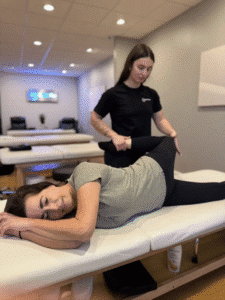
At StretchPlex, we tailor every session to your needs — combining dynamic, static, and ballistic methods to create the ideal balance of movement and recovery. Our Body Coaches use precise, guided motion to help your muscles relax and extend safely. (Check our StretchPlex Pricing for session details).
Many clients are surprised at how comfortable ballistic stretching feels when done correctly. It’s never about “bouncing hard” — it’s about fluid, intentional movement that builds confidence and flexibility over time.
If you’re curious, request an appointment or schedule our $19 Intro Stretch Session and experience the StretchPlex approach to flexibility training. It’s safe, effective, and customized to your body.
The Bottom Line
So, is ballistic stretching dangerous? Only when it’s done carelessly. In the right hands, the ballistic method of developing flexibility is the safest form of stretching — because it trains your body the way it actually moves: dynamically, powerfully, and with control.
By combining smart technique, professional guidance, and consistent practice, you can safely unlock new levels of mobility and performance — one bounce at a time.