

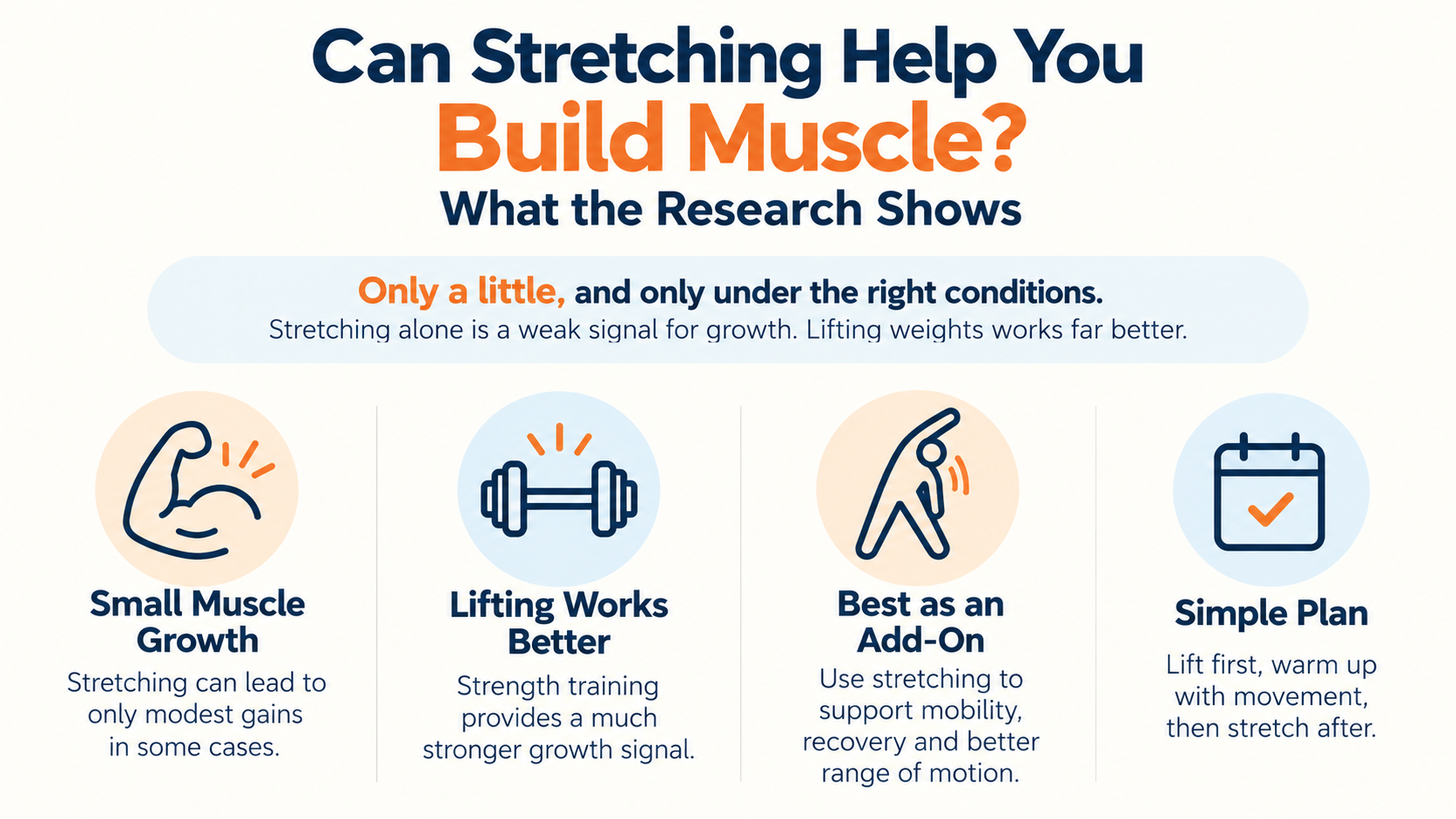
Only a little, and only under the right conditions. In people, stretching alone is a weak signal for growth. Some studies show small gains from very long, hard stretching sessions. But lifting weights works far better. Think of stretching as a helpful add-on, not a replacement for training.
Picture a lifter who skips weights and just stretches for an hour a day. Would they get bigger? It’s a fair question, and the science is more interesting than a plain yes or no. If you’ve ever asked does stretching build muscle, you’ve probably seen both loud claims and loud dismissals. The truth sits in the middle. Let’s walk through what builds muscle, what studies found, and how to use stretching so it actually helps.
What Actually Builds Muscle
Muscles grow when they get a strong enough signal. Researchers point to three main triggers: mechanical tension, muscle damage, and metabolic stress. Tension matters most. It happens when a muscle works against a heavy load.
A stretch adds tension too, but it’s usually mild. You’re lengthening the muscle, not asking it to fight a weight. That’s the big reason a short stretch doesn’t change your size. The signal is too faint.
Sore muscles after a hard session can also muddy the picture. If you’re curious why stretching can leave you sore, the answer is often just tension in tissue that isn’t used to it. Soreness alone doesn’t mean growth.
What the Studies Found
The most dramatic results come from animals. In studies on birds, researchers kept a muscle under steady stretch for many hours a day. The muscles grew a lot. A review of those studies found large increases in both muscle mass and fiber size.
People can’t copy that. Nobody holds a stretch for 24 hours.
Human research is much quieter. One large review found small strength gains from long-term stretching. The effects on muscle size were unclear, with only a modest benefit at best. Bigger gains showed up when people stretched longer, used more varied stretches, or were already trained.
In plain terms, you’d need a lot of time under stretch. That’s why how long you hold a stretch matters so much. Ten seconds won’t do much for size. Longer, harder holds might, but they also take more time and carry more risk.
Stretching vs. Lifting at a Glance
Here’s a simple comparison. It’s a rough guide, not a lab result.
| Approach | Growth signal | Worth your time? |
| Short static holds | Very low | For mobility, yes |
| Long, intense stretching | Low to modest | Only as an add-on |
| Lifting through full range | High | Yes, your main tool |
Notice the pattern. Lifting wins. Stretching trails far behind. But the table also shows something useful: you can do both, and each one covers what the other misses.
How Stretching Helps Your Gains Indirectly
Even if stretching won’t add much size by itself, it can help you build muscle in other ways.
Better range of motion. If your hips are tight, your squat gets shallow. A deeper squat works more muscle through a longer path. Loosening up first lets you lift better.
A smarter warm-up. Moving through dynamic stretching before you lift gets blood flowing and wakes up your joints. Save the long holds for later.
Easier recovery days. Tight legs are common after heavy sessions. Many lifters wonder why hamstrings stay tight after leg day, and gentle stretching can take the edge off.
Better consistency. You can’t build muscle if you’re too stiff or sore to train. Staying loose helps you show up, and showing up is what grows muscle.
A Simple Plan That Works
You don’t need anything fancy. Try this:
- Lift first. Make heavy, full-range strength work the core of your week.
- Warm up with movement. Do leg swings and arm circles, not long holds. The difference between warming up and stretching is worth knowing.
- Stretch after. Hold each stretch for 30 to 60 seconds while your muscles are warm.
- Pick tight spots. Focus on the areas that limit your lifts, such as hips, calves, and shoulders.
- Stay out of pain. A strong pull is fine. Sharp pain is not.
If you need ideas, these five leg stretches are a good place to begin. And skim the common stretching mistakes so you don’t undo your progress.
When Extra Help Is Worth It
Some lifters hit a plateau because of stiffness they can’t fix alone. A coach can spot weak links you’d never notice. That’s where a good recovery routine for serious lifters can pay off.
Assisted stretching is one option. A trained therapist takes you through deeper stretches while you stay relaxed. If you want a full plan, personal training can combine strength work and flexibility in one program.
So can stretching help you build muscle? A little, in the right dose. But it shines as a partner to lifting, not a rival. Want a hand getting your routine right? Book a session and we’ll build it around your goals.
Frequently Asked Questions
Can stretching alone build muscle?
Not well. Very long, intense stretching has shown small gains in some studies. But the effect is much weaker than lifting. Most people can’t stretch long enough to make it worth the time. Lifting gives a stronger signal in far less time.
Does stretching make muscles longer?
Not in a simple way. Regular stretching mostly helps you tolerate more stretch, so you can move deeper into a position. Whether the muscle itself gets longer is still unclear. Either way, your range of motion can improve.
Should you stretch before or after lifting?
Move before, hold after. Do light, dynamic moves to warm up. Then save the longer static holds for after your workout. Long holds right before a heavy lift can leave some people feeling a bit weaker.
Does stretching help with muscle recovery?
It can help you feel looser. The research on soreness is mixed, so don’t expect a quick fix. Gentle stretching, good sleep, and enough food do more for recovery. Use stretching as one piece of the plan.