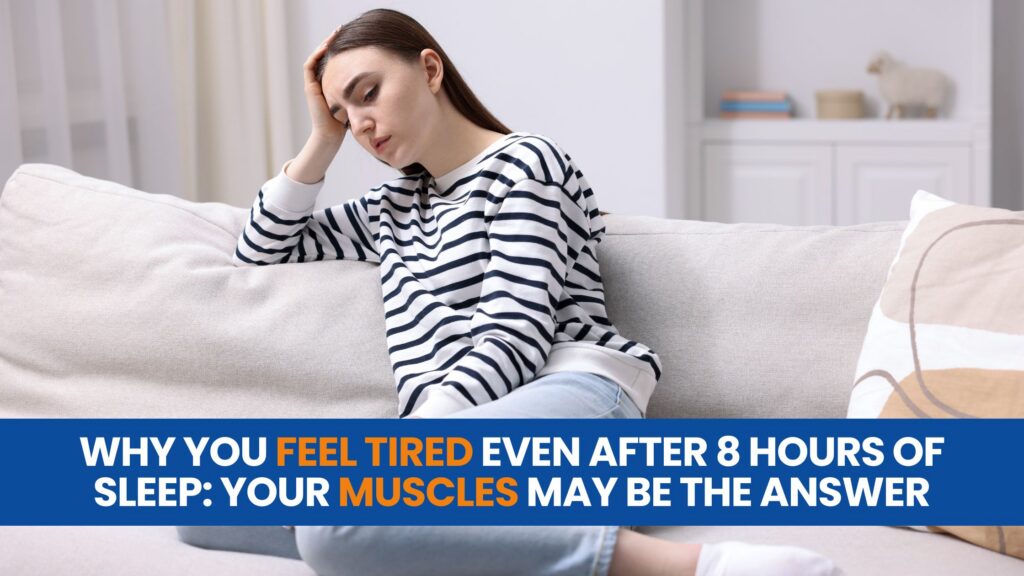
You went to bed on time. You slept a full 8 hours. You did everything right.
So why do you still feel worn out?
For a lot of people, sleep isn’t the real problem. It’s how the body feels the moment you wake up. Tight muscles, stiff joints, bad posture, and too little movement can leave you feeling heavy and sore. I hear this a lot from clients in their 50s and 60s. They sleep fine. Their body just won’t cooperate in the morning. That’s a different problem, and it needs a different fix.
At StretchPlex, people tell us things like, “I slept all night, but I still feel wiped out.” Or, “I need ten minutes just to warm up.” If that sounds like you, your muscles may be asking for movement, not more rest. Our guided muscle mobility sessions exist for this exact reason.
Sleep Fixes Your Brain. Movement Fixes Your Body.
Sleep matters. No argument there. Your brain needs it to reset. Your body needs it to repair.
But sleep does not undo a full day of sitting. It does not loosen hips that sat in a chair for eight hours. And it does not erase stress that built up in your shoulders since Tuesday.
Picture your body like a car left out in the cold. The engine still starts. It just needs a minute to run smoothly. Your muscles work the same way. After hours of lying still, many people wake up with tight hips, a stiff low back, heavy legs, and shoulders that feel like rocks. A good muscle mobility training plan that includes real recovery work can close that gap over time.
That tired feeling may have little to do with your sleep schedule. It may mean your body needs better movement. We call this stretch in motion.
What Is “Stretch in Motion”?
Stretch in motion means treating flexibility like an ongoing habit. It is not a ten-second toe touch you do once and forget.
It means moving your body through safe, guided motion. This helps your muscles loosen. It helps your joints move better. It helps your nervous system relax. A real stretch in motion routine uses slow assisted stretching, gentle mobility work, calm breathing, and movement that fits your body today, not the body you had at 25.
This is nothing like forcing a deep stretch you saw online. Your body does not need to be pushed hard. It needs steady, smart movement. That is the idea behind our structured mobility routine.
Tight Muscles Make Everyday Life Harder
When your muscles are tight, your body works harder just to move through a normal day.
Walking up stairs takes more effort. So does standing up from the couch. So does reaching for a shelf. Tight hip flexors throw off your posture. That can leave your low back tired by afternoon. Tight hamstrings make walking feel like wading through sand. Tight shoulders creep into your neck. That can wear you down before dinner.
You can sleep a full night and still feel like you are carrying yesterday’s tension. Research on stretch training has found real gains in range of motion. Some studies have also looked at links between stretching and sleep quality, though that link is still being studied. The main point is simple. When your body moves better, the day feels lighter. Booking a muscle tension relief session is often the fastest way to feel that shift for yourself.
Morning Stiffness Often Gets Mistaken for Fatigue
A lot of people call it “tired” when they really mean stiff, achy, or slow to get going.
That gap matters, because the fix is not the same. If you are truly sleepy, you may need better sleep habits or a doctor visit. If you are stiff and slow, your body may need flexibility work, better posture habits, and guided movement instead.
That is where flexibility classes and one-on-one assisted stretching help. Group flexibility classes build a good movement habit for many people. But if you deal with tight hips, low back pain, balance issues, or an old injury, one-on-one work often feels safer. You do not have to guess which stretch to try, or how hard to push.
Stress Does Not Just Live in Your Head
Stress shows up in your neck, shoulders, jaw, and hips. It is physical, not just mental.
You may fall asleep tense and wake up tense. Your brain rested. Your muscles did not get the memo.
Gentle stretching, slow breathing, and guided movement can help your body let go of that tension. That is a big reason people leave a stretch session feeling lighter. Not just more flexible. Calmer, too. Pairing stretch work with deep tissue percussion recovery can help that release happen even faster.
Why Assisted Stretching Works So Well
The biggest perk of assisted stretching is simple. A trained coach guides your body, but never forces it past where it is ready to go.
Your body is not the same every day. Some mornings your hips are the problem. Other days it is your back or your shoulders. A good coach adjusts to whatever shows up that day.
Assisted stretching can help with muscle stiffness, limited flexibility, poor mobility, tight hips and hamstrings, and neck or shoulder tension. Pairing it with compression muscle recovery can speed up how fast your muscles bounce back between sessions. The goal is not to turn you into a gymnast. The goal is to help you move through your day with less effort and more confidence.

A Real Example: Susan
Susan is in her 60s. She sleeps 7 to 8 hours most nights. But every morning, her hips feel locked and her low back is tight. The first hour of her day used to be slow, no matter how well she slept.
She thought she was just tired. Turns out, energy was only half the story. Her body was working against her every morning.
After a few hands-on flexibility coaching sessions, her hips and hamstrings started moving better. Getting out of bed got easier. Walking felt smoother. She felt more awake, mostly because moving no longer took so much effort. That is the real payoff of helping a body move the way it should.
When Should You Actually Pay Attention?
Waking up tired can come from many places. Poor sleep, stress, medication, nutrition, dehydration, sleep apnea, and other health issues can all play a part.
If your fatigue is severe, sudden, or getting worse, talk to your doctor. Do not wait on that one.
But if your tiredness comes with tight muscles, morning stiffness, achy joints, or low mobility, it may be worth trying stretching services built around your body. Check our muscle stiffness relief services to see what fits. Or look at stretching program pricing if you are ready to commit to something steady.
Your Mornings Do Not Have to Feel Like This
Waking up stiff, sore, and tired is not just “part of getting older.” It does not have to be your normal.
Your muscles can change. Your mobility can improve. Your mornings can feel different, often within a few weeks of steady work.
A guided stretch in motion plan can help your body feel less stuck and more ready for the day. Want to see what that looks like? Learn more about what StretchPlex is and how the program works. Or go ahead and claim a free stretching demo to feel the difference yourself.
If you are tired of feeling tired, ask a better question. Am I sleepy, or is my body just stiff? That one answer could change your whole morning.
Frequently Asked Questions
Why do I still feel tired even after sleepinga full8 hours?
Sleep rests your brain, but it does not loosen tight muscles or fix poor posture on its own. If you sleep enough but still wake up sore, the real issue is often physical stiffness, not a lack of rest.
What is the difference between being tired and being stiff?
Being tired usually means low energy and a foggy mind. Being stiff feels different. It is tight hips, a heavy low back, or shoulders that will not loosen, even when your mind feels fine. Many people mix up the two.
How doesassistedstretching help with morning fatigue?
A trained coach guides your body through safe, controlled motion. This helps release tension in your hips, hamstrings, shoulders, and back. That means daily movement takes less effort, and mornings feel lighter.
Should I see a doctor, or try stretching first?
If your fatigue is severe, sudden, or getting worse, talk to your doctor first. But if your tiredness comes with tight muscles, stiffness, or low mobility, stretching services are a safe place to start.