
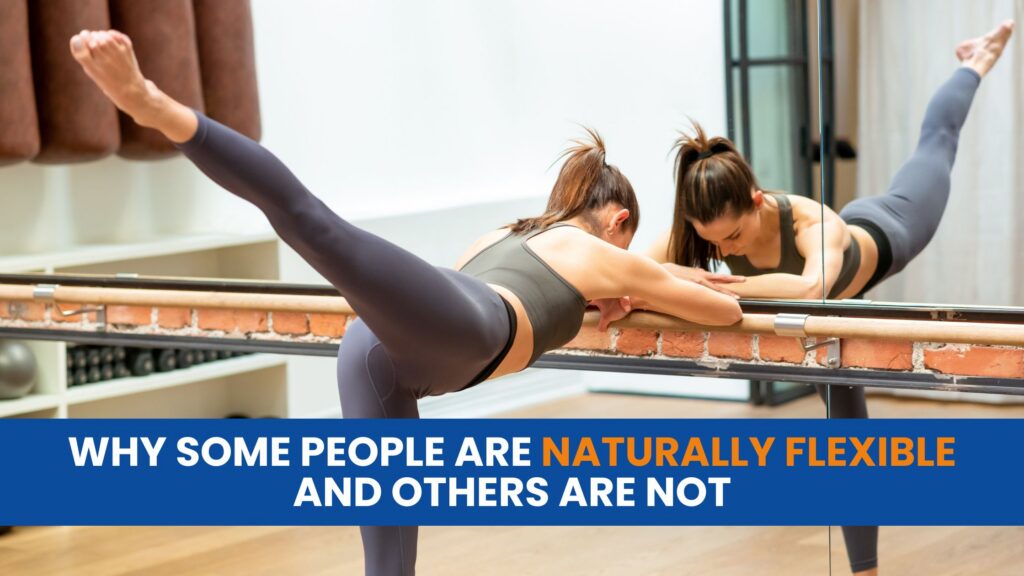
Watch someone bend over and slap their palms flat on the floor, no warm-up, no wincing. Meanwhile you’re reaching for your shoelaces like they insulted your family. Sound familiar?
It’s a fair thing to wonder about. “Was I just born stiff?” “Is this ever going to change?”
Short answer: yes and no.
Some people really do start out with more natural flexibility. Body type, joint structure, genetics, age, and daily habits all play a part. But that starting point isn’t your finish line. Muscle flexibility and joint mobility can improve at almost any age, once your body gets the right kind of care, the right pressure, and enough consistency behind it.
That’s the whole idea behind assisted stretching. It helps your body move better without leaving you to guess your way through it alone.
And people don’t expect young athletes to be shockingly tight, too. Age isn’t the only culprit here.
Why Some People Are More Flexible
Flexibility is your muscles and joints’ ability to move through a full, healthy range of motion. Some people simply have more of it built in.
Genetics matters. Some folks are born with looser joints and more pliable connective tissue. Research backs this up – genetics does influence baseline flexibility, though daily movement habits carry serious weight too.
Are you genetically “loose”? Try this quick check:
- Can you bend your wrist and stretch your thumb back toward your forearm?
- Can your elbow bend past fully straight?
- Can you bring both elbows in front of your chest and touch them together?
Answered yes to most of these? You’re probably on the more flexible end of the spectrum – which usually means your focus should shift toward strengthening and joint stability rather than stretching.
Age plays its part too. Muscles, tendons, and joints tend to tighten as the years add up, especially if you’re sitting more and moving less. Stiffness doesn’t announce itself. It creeps in. One day getting out of the car, tying your shoes, or checking your blind spot while driving just feels harder than it used to.
Your daily routine might be the biggest lever of all. Desk job. Long commute. Same sleeping position every night. Your body adapts to whatever you ask of it most. Muscles that stay shortened tighten up. Joints that rarely move through their full range start to feel locked.
None of that means something is wrong with you. It means your body adjusted to your habits – and habits can change. If you’re curious how a structured approach actually works, here’s how StretchPlex approaches mobility.
We’re built to move. Sitting still all day genuinely works against us.
Flexible Doesn’t Always Mean Healthy
Here’s the twist that surprises most people.
Being extremely flexible isn’t automatically better. Some people have a huge range of motion but very little control over it. Their joints move freely, sure, but the surrounding muscles don’t stabilize them well – and that combination often leads to aches, joint instability, or injury down the line.
On the flip side, someone who feels stiff might actually carry solid strength. Their muscles are just guarded, overworked, or simply not used to relaxing.
The goal isn’t to become a gymnast. The goal is to move through your day comfortably, safely, and with confidence.
For most adults – especially anyone past 50 – healthy flexibility looks like:
- Standing up without groaning
- Getting in and out of the car with ease
- Walking with less stiffness
- Turning your neck and back comfortably
- Moving through daily life without feeling boxed in
- Feeling steady, strong, and capable
That’s where a structured mobility program and professional guidance really earns their keep.
Why Stretching on Your Own Can Be Hard
Plenty of people try stretching solo and end up frustrated. They hold a position for three seconds, bounce into it, push way too hard, or just give up because it’s uncomfortable. Others genuinely aren’t sure what they should even be stretching.
Take someone with low back tightness. They assume the problem lives in the back. But the real driver might be tight hips, hamstrings, glutes, or even a walking pattern that’s been off for years.
Or someone dealing with knee discomfort who fixates on the knee itself, when tight quads, calves, or hip flexors are running the show.
This is where guided stretching earns its value. You’re not guessing anymore. A trained stretch coach reads your body, guides you into better positions, controls the intensity, and adjusts session to session based on how you’re feeling that day. It’s the core idea behind every guided stretching session we run.
Honestly? Having someone who knows exactly how to stretch you feels like a small luxury most people don’t know they need.
The Real Benefits of Assisted Stretching
The benefits of assisted stretching go well beyond “getting loose.”
A structured stretch therapy session helps tight, shortened muscles gradually relax and lengthen, which improves both flexibility and range of motion over time. Studies on consistent stretching in older adults show measurable gains in joint mobility and functional movement.
At StretchPlex, every session is personalized. That matters, because your tight spots, movement history, past injuries, and comfort level cannot compare to next person’s. You can see how sessions are priced before your first visit.
Clients regularly mention:
- Less day-to-day muscle tension
- Smoother movement during everyday tasks
- Sharper posture awareness
- Easier walking, bending, and reaching
- Faster recovery after golf, tennis, walking, or a hard workout
- More confidence moving without feeling fragile
For a lot of clients, the emotional shift matters just as much as the physical one. Constant stiffness has a way of making you feel older than you are. Move better, and you often start feeling like yourself again.
Why Guided Stretching Works Better for Many People
A good stretch shouldn’t feel scary. It should feel controlled – almost calm.
During a guided session, your coach helps you sink into the stretch instead of fighting it. They’ll also catch the mistakes people make on their own: twisting the wrong way, holding their breath, pushing straight into pain.
This tends to help people who say things like:
- “I’m too tight to even start stretching.”
- “I never know if I’m doing it right.”
- “I’m scared I’ll hurt myself.”
- “I used to be flexible. Not anymore.”
- “I wake up stiff every single morning.”
Funny enough, those are exactly the people who benefit most from professional stretching services. You don’t need to be flexible to start. Being stiff is one of the best reasons to start.
Can You Become More Flexible If You’re Naturally Stiff?
Yes. In most cases, absolutely.
You might never move exactly like someone who was born naturally bendy – and that’s fine. Your progress is the goal here, not somebody else’s range of motion.
Flexibility improves when your body feels safe, supported, and worked at a consistent pace. That means the right intensity, applied often enough to create real change, matched to what your body can handle.
Think of it like brushing your teeth. Doing it once barely moves the needle. Doing it regularly changes the outcome completely.
Someone who gets guided support once or twice a week, plus a little extra movement between sessions, usually notices a real shift over time – easier mornings, looser hips, less restriction during the activities they enjoy.

A Simple Example
Picture two people.
One has stayed active for years – walking, gardening, golfing, stretching a little most days. Their body is used to consistent movement.
The other used to be active too, but life got in the way. Work, driving, stress, sitting. That became the routine, and now their hips, back, and legs feel tight almost constantly.
The first person looks “naturally flexible.” Part of that flexibility, though, came from years of staying in motion.
The second person feels naturally stiff. In reality, their body probably just needs a better plan – like the kind mapped out during a free stretching demo.
That’s the hopeful part. Stiffness is often changeable.
When to Consider Stretching Services
Consider a guided mobility routine if you feel tight no matter what you try, avoid certain movements altogether, feel stiff after sitting for a while, or simply want to stay active as you age.
It also helps if you’re returning to exercise, working to improve mobility and flexibility, or looking for a safer entry point than jumping straight into intense workouts.
StretchPlex offers assisted stretching, personal training, and compression therapy across Delaware, with locations serving Hockessin, Greenville, and North Wilmington.
Your Body Can Change
Some people are naturally flexible. Some aren’t. But where you’re starting from doesn’t have to be where you end up.
If you feel stiff, tight, or limited, your body probably isn’t broken. It likely just needs the right support, the right stretch, and a bit of consistency.
The real goal was never touching your toes.
It’s feeling better while you move through your day.
Ready to take the next step? You can book an appointment and see what a guided approach feels like for yourself.
Frequently Asked Questions
What’s the difference between assisted stretching and stretching on your own?
Assisted stretching involves a trained coach guiding your body through positions you likely couldn’t reach – or wouldn’t hold safely – on your own. They control the angle, depth, and pace, which means less guesswork and a lower chance of pushing a muscle too far.
How often should I book stretching services to see real results?
Most people notice a difference between one to two sessions a week, paired with a bit of movement in between. Flexibility responds to consistency more than intensity, so steady sessions almost always beat occasional, hard pushes.
Can assisted stretching help if I’m not an athlete?
Definitely. Most clients aren’t training for competition – they’re trying to get out of bed easier, walk without stiffness, or garden without their back locking up. Everyday mobility is the whole point for a lot of people who walk through the door.
Is it normal to feel sore after a guided stretching session?
Mild soreness, like what you’d feel after light exercise, is common – especially in your first few sessions. Sharp pain isn’t normal and should always be mentioned to your coach right away so the approach can be adjusted.