
If your body feels stiff, tight, or restricted during everyday movement, you are not alone. Long hours sitting, intense workouts, poor posture, and daily stress can all reduce flexibility and make muscles feel constantly tense over time. Assisted stretching helps improve mobility, reduce muscle tightness, support recovery, and helps your body move more comfortably with guided professional support.
Unlike stretching on your own, assisted stretching massage involve a trained specialist who helps move your body through controlled stretches designed around your flexibility, mobility, and recovery needs.
In this article, we’ll explain what assisted stretching is, different types of stretching techniques, and the biggest benefits of working with a professional stretching coach.
What Is Assisted Stretching?
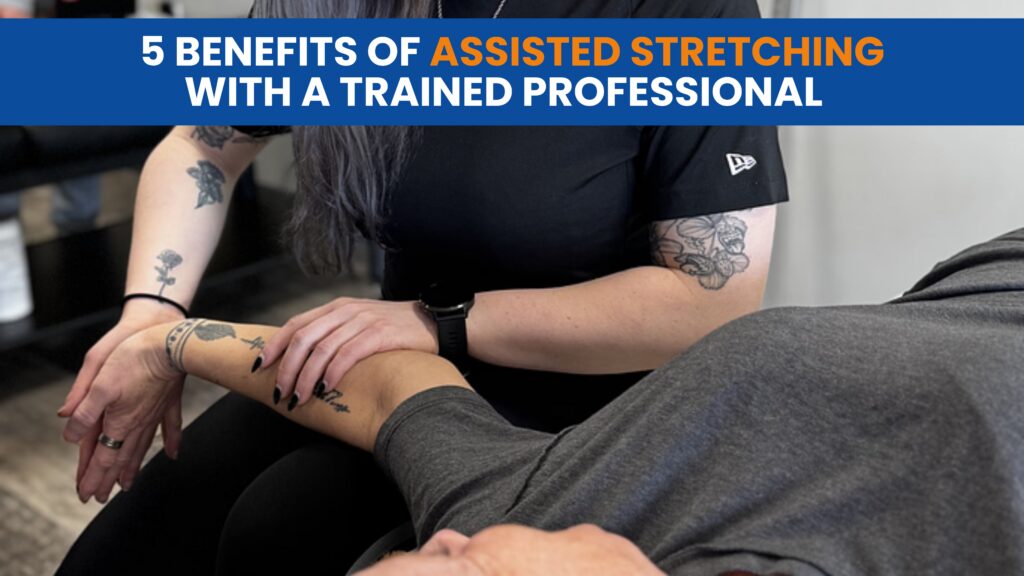
Assisted stretching is a guided stretching method where a trained professional helps move your muscles and joints through a wider range of motion than you may be able to reach on your own.
Unlike regular self-stretching, the professional manages the movement, the positioning, and the intensity of the stretch, while you stay relaxed. This makes it easier for muscles to let go of tension in a safer way.
A lot of people say assisted stretching massage feels kind of like yoga… except you are not doing all the work. Your body stays calm, and the therapist focuses on restricted muscles and movement patterns, step by step.
A trained flexibility coach also understands body mechanics, posture, muscle imbalances, and mobility limits. That helps make sure the stretches are done correctly, and matched to your body’s specific needs, not just a one-size plan.

3 Types of Stretching Exercises
There are a few types of stretching techniques that commonly come up when people want better flexibility and mobility.
1. Static Stretching
Static stretching is when you hold a stretch in one position for a set amount of time.
You will often see this used after workouts, so muscles can cool down and recover. Over time, static stretching can reduce tightness and improve flexibility.
Examples include:
- Hamstring stretches
- Quad stretches
- Shoulder stretches
- Hip flexor stretches
2. Dynamic Stretching
Dynamic stretching is controlled by movement through a range of motion.
Instead of staying in one place, you stay active and moving. People usually do this type before exercise, to warm up muscles and get your body ready for action.
Examples include:
- Leg swings
- Arm circles
- Walking lunges
- Torso rotations
Dynamic stretching supports circulation, mobility, and athletic performance.
3. PNF Stretching
PNF stands for proprioceptive neuromuscular facilitation.
This technique mixes stretching with muscle activation, and it is often used during assisted stretching sessions with a trained professional.
PNF stretching can improve flexibility and mobility more effectively than a lot of traditional stretching, because it helps muscles relax deeper while the stretch is happening.
Many full body stretching sessions include PNF techniques to improve movement and reduce stiffness, pretty frequently.
3 General Benefits of Stretching
Stretching brings a bunch of physical advantages for people of different ages and activity levels.
Improved Flexibility
One of the clearest benefits of stretching is increased flexibility.
Stretching helps lengthen muscles and improves joint mobility, so your body can move more freely, without as much discomfort.
When flexibility gets better, it can also support athletic performance, posture, and everyday motion.
Increased Range of Motion
When you stretch regularly, your joints and muscles can move farther and still stay safe.
Improved range of motion can make daily stuff easier like:
- Bending
- Reaching
- Walking
- Exercising
- Lifting
And honestly, this gets even more important as people age, because mobility naturally tends to shrink over time.
Reduced Risk of Injury
Tight muscles and limited mobility can raise the chance of strains and injuries.
Stretching supports better muscle balance and movement quality, which may lower injury risk during exercise and other physical activities.
5 Benefits of Assisted Stretching with a Trained Professional
Stretching by itself can help, sure, but working with a trained professional brings extra advantages that many people cannot reach alone.
1. Deeper and More Effective Stretches
One of the main benefits of assisted stretching is the ability to reach deeper stretches while still staying safe.
A trained professional can guide your body into positions that might feel too difficult or awkward to try by yourself, and they help you stay relaxed during the whole session.
Because of that, muscles can release tension more effectively, and mobility may improve faster than with many self-stretching routines.
2. Reduced Muscle Tension
Modern life often creates tight muscles that build up over time from:
- Sitting at desks
- Driving
- Stress
- Repetitive movement
- Intense workouts
Assisted stretching massage can help release build-up tension and improve overall comfort.
A lot of people say they feel lighter, looser, and less stiff right after the session ends.
3. Improved Posture
Poor posture is extremely common, especially with prolonged sitting and screen time.
Tight chest muscles, hip flexors, shoulders, and hamstrings can all contribute to posture issues.
A trained flexibility coach can spot those areas that are tight, then use targeted stretching approaches to improve alignment in a natural way.
Better posture may also help ease neck, shoulder, and lower back discomfort.
4. Increased Relaxation
Stretching is not only for the body, but it can also help you calm your mind and reduce stress.
Many people find full body stretching sessions relaxing, because the body can release tension while breathing slows and your movement feels kind of restricted.
That can support both physical well-being and mental well-being as well.
5. Reduced Stress and Better Recovery
Stress sometimes shows up in the body as tight muscles, and then your movement feels kind of restricted, like everything is stuck.
With assisted stretching, you get a calmer nervous system, plus circulation and mobility can improve too.
And for active people, stretching can support faster recovery after workouts, not just by “loosing up” but also by reducing excessive muscle tightness, and helping the blood flow move more freely.
That’s why athletes, golfers, runners, and everyday active adults now add regular stretching sessions into their recovery routine, almost like a little non-negotiable habit.
Why More People Are Choosing Full Body Stretching
As people start paying more attention to mobility and recovery, they’re also looking for professional stretching services.
A customized full body stretching session can work on several muscle groups, and help your whole body move as one unit, more coordinated.
Instead of only chasing a single sore spot, full-body sessions help you cover overall mobility, posture, flexibility, and movement quality.
This kind of approach is especially helpful if you are dealing with:
- Chronic stiffness
- Sedentary lifestyles
- Sports recovery
- Limited mobility
- Muscle tightness
- Posture issues
Experience the Benefits of Assisted Stretching
Getting more flexible and mobile isn’t only for athletic performance; it’s also about everyday comfort.
When you work with a trained flexibility coach, you can improve your range safely, lower tension, and keep your physical wellness on the right track, long term.
Whether you want to recover from workouts, clean up your posture, boost flexibility, or just feel less stiff throughout the day, assisted stretching massage can be a real solid, relaxing option.
Ready to feel the benefits of assisted stretching? Schedule your first session today and see how professional stretching can help your body move better, recover faster, and feel healthier overall.
FAQs
What is assisted stretching?
Assisted stretching is a guided stretching session where a trained professional helps move your body through deeper stretches to improve flexibility, mobility, and recovery.
How is assisted stretching different from stretching on your own?
With assisted stretching, a flexibility coach helps target tight muscles safely and effectively, allowing for deeper stretches and better results than many self-stretching routines.
What are the benefits of full body stretching?
Full body stretching can improve flexibility, posture, circulation, mobility, muscle recovery, and reduce everyday stiffness and tension.
Is assisted stretching massage good for athletes and active adults?
Yes, assisted stretching massage is popular among athletes, runners, golfers, and active adults because it can help improve recovery, reduce muscle tightness, and support better movement performance.