
A massage can feel incredible in the moment. You walk out relaxed, lighter, and maybe even a little looser.
Then a day or two later, the tightness creeps back in.
That’s when the question shifts. Not just “what feels good right now,” but “what actually helps my body stay better?”
That’s where assisted stretching starts to stand out.
What Assisted Stretching Really Does
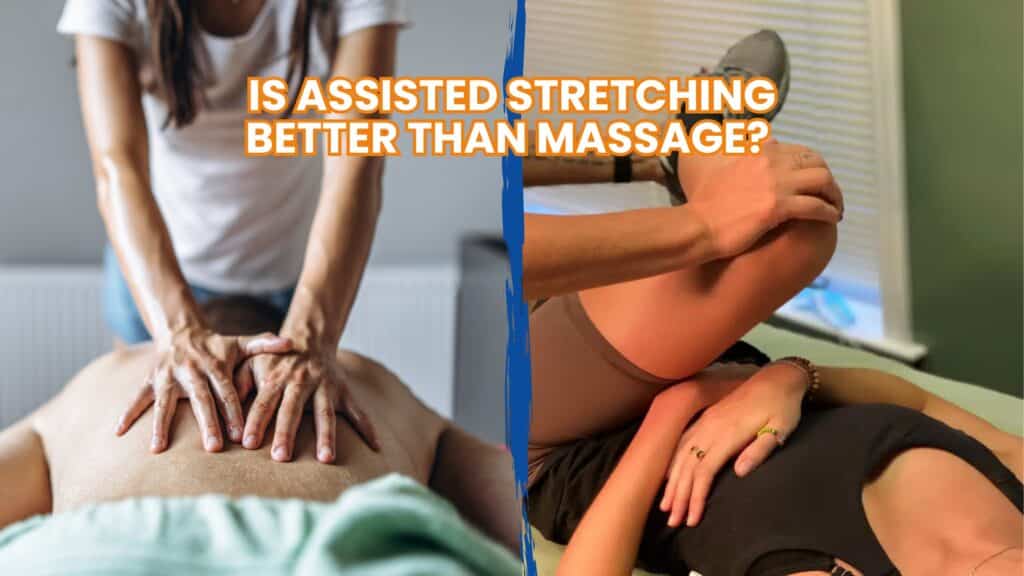
Assisted stretching is simple. A trained coach moves your body through stretches while you stay relaxed.
You’re not forcing anything. You’re not guessing if you’re doing it right. Your body is guided safely into positions that improve flexibility and movement.
The biggest difference comes down to this:
Assisted stretching helps change the length of your muscles over time.
Tight muscles don’t just feel uncomfortable. They limit how you move, how you walk, and how your joints function day to day.
When muscles stay short and restricted, your body starts to compensate. That’s when stiffness turns into aches, and aches start to linger longer than they should.
What Massage Is Best For
Massage therapy has its place.
It’s excellent for:
- Relaxing the body
- Reducing stress
- Improving circulation
- Easing surface-level tension
It can feel like a reset after a long week.
But massage mainly works on temporary tension, not long-term mobility.
That’s why the relief often fades. The muscle hasn’t actually changed in how it functions. It’s just been loosened for the moment.
The Key Difference Most People Notice
Here’s where things separate.
Massage helps you feel better quickly.
Assisted stretching helps your body work better over time.
Think of it like this:
- Massage loosens things up
- Assisted stretching helps your body stay loose
That difference shows up in everyday life. Walking feels smoother. Bending down feels easier. Getting up from a chair doesn’t feel like effort.
Why Assisted Stretching Fits Into Real Life
One of the biggest surprises for people is how easy it is to fit into a normal day.
With assisted stretching:
- You stay fully clothed
- No oils, no cleanup
- You can come in before work, during lunch, or after your day ends
- Sessions are quick and focused
You don’t have to block off hours or rearrange your schedule.
It’s simple, clean, and easy to repeat consistently.
Stretching Exercises for Legs
Tight legs are one of the most common issues people deal with.
Hamstrings, hips, and calves tend to tighten up from:
- Sitting for long periods
- Moving less than you used to
- Old injuries
- Daily habits that limit movement
Stretching exercises for legs can help, including:
- Hamstring stretches
- Hip flexor stretches
- Calf stretches
The challenge is consistency and technique.
Most people rush through stretches or avoid the areas that feel tight. And when you stretch on your own, your body often resists going deeper.
With assisted stretching, a coach helps guide you into those positions safely, so you actually get the benefit without strain.
Stretching Exercises for Seniors
As the body gets older, flexibility starts to affect everyday movement more than people expect.
Simple things can feel harder:
- Getting out of a chair
- Reaching overhead
- Walking without stiffness
- Staying active without hesitation
Stretching exercises for seniors need to be done carefully and with control.
Too much force or poor positioning can cause problems.
Assisted stretching provides:
- Guided movement
- Proper support
- A safe way to improve flexibility over time
It gives people confidence to move again without worrying about overdoing it.

So… Is Assisted Stretching Better Than Massage?
It depends on what you’re looking for.
If you want to relax and unwind, massage is a great option.
If you want to improve how your body moves, reduce stiffness, and feel better throughout the week, assisted stretching usually gives you more lasting results.
Some people use both.
But once they feel the difference in how their body moves after consistent stretching, they tend to lean in that direction.
A Simple Way to Look At It
- Massage = short-term relief
- Assisted stretching = longer-lasting improvement
Both can help.
They just serve different purposes.
Something Worth Paying Attention To
Most people wait until stiffness becomes frustrating before doing anything about it.
But it usually starts small:
- Feeling tight in the morning
- Slight resistance when bending or reaching
- Movement feeling more restricted than it used to
Catching it early makes everything easier.
When your body moves well, everything else feels better too. Walking, exercising, even just getting through your day without that constant tightness in the background.
And that’s what people really want. To feel comfortable moving again.
FAQs
What type of stretching is best for seniors?
Gentle, controlled stretching is usually best for seniors. Assisted stretching and low-impact mobility exercises can help improve flexibility, balance, and range of motion while reducing the risk of strain.
What is the safest stretching technique?
The safest stretching technique is slow, controlled static stretching without bouncing. Guided assisted stretching is also a safe option because a trained professional helps position the body properly and within a comfortable range.
What is the best stretch for legs?
Some of the best stretching exercises for legs include hamstring stretches, calf stretches, quad stretches, and hip flexor stretches. These target common tight areas and help improve mobility and circulation.
How to relax leg muscles naturally?
You can relax leg muscles naturally through light stretching, hydration, walking, warm baths, massage, and assisted stretching sessions. Regular movement and recovery routines also help reduce tightness and soreness.