
The Quick Read:
Tight hips after 50 often stem from sitting and loss of muscle elasticity, not just “getting old.” To fix it, stop aggressive stretching and start consistent, gentle mobility work. Focus on your hip flexors and glutes to protect your lower back and get moving comfortably again.
If you’ve noticed your hips feel tighter than they used to, you’re not imagining it. I know that I am noticing tighter hips ever since I started sitting more and celebrated my 60th birthday! Yikes!
- Maybe it’s harder to get up from a chair.
- Maybe your stride feels shorter.
- Maybe your lower back aches after walking or golfing.
- Tight hips after 50 are incredibly common. It is hard to believe that your body behaves like everyone else’s as you age, but it is true! Your body is not broken; it just needs the right kind of movement.
I want to explain why this happens and what you can safely do about it.
Why Do Hips Get Tight After 50?
Your hip from the inside; the side of your hips
There are a few big reasons hip stiffness increases with age.
1. More Sitting, Less Natural Movement
Even active adults sit more than they realize: driving, watching TV, or working on a computer. Sitting shortens the hip flexors and reduces circulation. I know that I can sit for over an hour without even noticing!
Over time, that creates hip stiffness after 50 that feels constant.
2. Loss of Muscle Elasticity
As we age, muscles naturally lose some elasticity. That does not mean you cannot improve; it just means you need consistent, gentle mobility work. Your body responds to the forces that you place on it. We all become “high maintenance”!
3. Weak Glutes and Core
When glutes are weak, the hips and lower back compensate. That can create:
- Hip tightness
- Lower back discomfort
- Shortened stride when walking
- Trouble standing up from the floor
I promise you that you will get weaker as you age unless you do some kind of strength training.
4. Old Injuries That Never Fully Resolved
Past back pain, knee pain, or even ankle issues can change how you move. The body adapts. Over time, that adaptation becomes stiffness.
Signs Your Tight Hips Are Affecting You
You might notice:
- Trouble crossing your legs
- Stiffness when getting out of the car
- Aching in your lower back
- Feeling “locked up” in the morning
- Shorter golf swing or reduced rotation
Many people assume this is just aging. It is not just aging; it is reduced mobility. And mobility can improve.
If you are considering regular mobility sessions, you can also review StretchPlex Pricing to see the different options available
What To Do About Tight Hips After 50
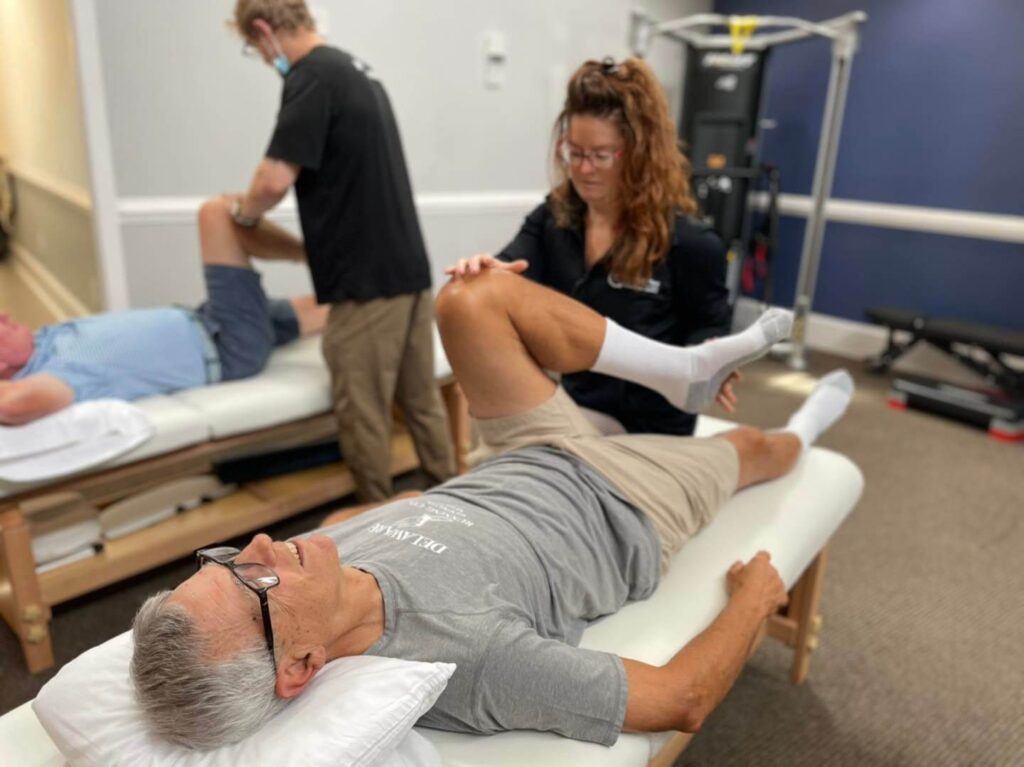
The goal is not aggressive stretching. The goal is safe, controlled movement that restores balance. Here are simple strategies that work.
1. Stretch Your Hip Flexors Daily
Tight hip flexors are one of the biggest causes of hip stiffness aging adults experience.
Try this:
- Step one foot back into a gentle lunge
- Keep your torso upright
- Slightly tuck your hips under
- Hold for 20 to 30 seconds each side
You should feel a stretch in the front of the back leg, not in your lower back.
If you want to add another simple stretch to open the hips and improve flexibility, you may also want to explore Butterfly Stretch Benefits: Why This Hip-Opening Move Belongs in Your Routine, which explains another gentle movement many adults find helpful.
2. Strengthen Your Glutes
Mobility without strength does not last. A simple glute bridge is powerful:
- Lie on your back with knees bent
- Press through your heels
- Lift hips slowly
- Squeeze your glutes at the top
- Lower slowly
Start with 8 to 10 reps. Stronger glutes support better hip mobility.
3. Add Gentle Rotation
Hips are meant to rotate. Many adults stop rotating through daily life. Standing rotations, supported lunges, and controlled leg swings can help restore motion safely.
Move slowly. Breathe. Never force range. Hip rotation is the biggest issue that you need to correct for your healthy function as an adult.
4. Be Consistent
The biggest mistake people make is doing mobility for a week and stopping. Hip mobility exercises for seniors work when done regularly. Even 10 minutes a day can make a difference.
When Stretching Alone Is Not Enough
Sometimes tight hips after 50 are not just about stretching. They are about:
- Muscle imbalances
- Protective tension
- Fear of movement
- Not knowing what is safe
This is where guided help makes a difference.
At StretchPlex in Northern Delaware, we work with adults who want to move confidently without aggressive gym environments.
Our assisted stretching sessions are:
- One on one
- Calm and supportive
- Customized to your body
- Focused on safety
Many clients come in saying, “I thought this was just part of getting older.” After a few sessions, they move easier, walk longer, sleep better, and feel steadier. You do not have to force your body; you just need the right support.
Some people also benefit from professional Assisted Stretching, where trained specialists guide your body through safe movements designed to improve mobility and reduce stiffness.
Can Tight Hips Really Improve After 50?
Yes. The body responds to stimulus at any age. It just responds better to smart, controlled input.
If you are feeling stiff:
- Start gently
- Move daily
- Add strength
- Get guidance if needed
You deserve to feel steady and strong when you stand up, walk, and live your life. If you are local to Northern Delaware and want support, you can learn more at www.stretchplexnow.com or call 302-696-5966.
Your hips are not stuck. They are just waiting to move again.
Frequently Asked Questions
1. Why do hips get tighter after age 50?
Hips often become tighter after 50 because people tend to sit more, muscles lose some elasticity, and strength in the glutes and core decreases. These factors reduce mobility and can cause stiffness in the hips and lower back.
2. Can tight hips cause lower back pain?
Yes. Tight hips can limit how your body moves during walking, standing, and bending. When the hips do not move properly, the lower back often compensates, which can lead to discomfort or stiffness.
3. How long does it take to improve hip mobility?
Many people notice improvement within a few weeks when they practice gentle mobility exercises consistently. Even 10 minutes of daily stretching and strengthening can gradually improve hip mobility.
4. What is the best exercise for tight hips after 50?
Simple exercises like hip flexor stretches, glute bridges, and gentle hip rotations are very effective. These movements improve flexibility while strengthening the muscles that support the hips.